

Sport and Exercise Nutrition MSc
2027-28 Year of entry
Our master's degree in Sport and Exercise Nutrition was written in consultation with industry-leading experts and employers including the English Institute of Sport (EIS) to maximise the value of the degree to potential employers in elite and professional sport.
/695x0:1206x1100/prod01/channel_3/media/middlesex-university/courses-images/ug-courses/health-and-education/Sportsexercisenutrition_herobanner.jpg)
Why study MSc Sport and Exercise Nutrition at Middlesex University?
Our master's degree in Sport and Exercise Nutrition was written in consultation with industry-leading experts and employers including the English Institute of Sport (EIS) to maximise the value of the degree to potential employers in elite and professional sport.
- Practical learning: The course focuses on professional practice and is underpinned by solid scientific and technical foundations.
- Real-world experience: Work placements and practical training are integrated into the course, equipping you with significant experience in a professional setting.
- State-of-the-art facilities: In our partnership with Saracens Rugby Club, you’ll have access to the fantastic resources at StoneX Stadium, including the £23 million redevelopment project of the West Stand. With some of the most advanced equipment in the UK, you will be able to utilise specialist spaces, simulation suites, specialist labs, plus much more.
- Industry relationships: Make the most of our links by working with professional sports teams.
- Future opportunities: Students of the course with relevant undergraduate degrees in nutrition, sport and exercise science or biological sciences meet the eligibility criteria for graduate registration with the Sports and Exercise Nutrition Register (SENr).
Please note that this course is subject to review.
Student stories and experiences
/10x0:1122x760/prod01/channel_3/media/middlesex-university/news-section-images/2025/Nick-Bender-Walk-and-Talk-CIC.jpg)
Modules
The MSc Sport and Exercise Nutrition degree is made up of five individual modules designed to equip you with the knowledge and tools needed to excel in the rapidly growing field of performance nutrition as a SENr registered practitioner. Two 30-credit modules in the Theory of Sport and Exercise Nutrition and Applied Sport Nutrition lay the scientific foundations for the rest of the course and are followed by a 30-credit module designed to develop your professional skills and experience. A research methods module then prepares you with the techniques required to undertake your major research project, a 60-credit dissertation on a subject of your choice. Full-time students will complete the programme in one year, while part-time students will complete both core modules research methods in their first year, with the second year spent on their professional placement and undertaking their dissertation.
The aim of this module is to provide students with a comprehensive theoretical understanding of sport nutrition, as well as the practical skills required to work as a Sport and Exercise Nutritionist. Theoretical concepts will be explored in a laboratory environment, and students will be expected to appropriately interpret resultant data.
This module aims to develop your practical and theoretical skills essential to designing, delivering and monitoring athletic programmes and optimising sport performance and recovery with devising individualised nutritional support programmes. You will be taught to examine the influence of nutrition on sporting performance and to explore the role of nutritional strategies during the preparation for, participation in, and recovery from sport competition. The module, along with previously studied modules, will help prepare you through the certification requirements of relevant professional bodies such as the UK Sports & Exercise Nutrition Register (SENr).
This module aims to develop the student's ability to apply and see the application of knowledge gained from other modules in relation to a real work scenario. You will be required to adopt a reflective and critical approach to your working practice and to promote a problem-solving approach in a work environment.
The Research Methods module provides a critical overview of the main methods and approaches used for research into topics areas related to sport and exercise nutrition, and enables you to apply this knowledge when planning a research proposal. The module affords opportunities to appraise the strengths and weaknesses of published work in your specialist area. You will learn in groups and explore philosophical, ethical and methodological differences which underpin various approaches to knowledge generation, while interprofessional workshops allow you to develop a research proposal, consider its adequacy and limitations, and justify the approach taken.
Throughout the dissertation module you will be supported while undertaking research with a focus appropriate to your area of interest, potentially building upon the research proposal formulated in the Research Methods module. The module creates a peer learning community for students, enabling you to provide guidance and to critically support one another on matters of ethical application, research methods, data collection, analysis and writing-up in the research process – in addition to that provided by your supervisor.
To find out more about this programme, please download the MSc Sport and Exercise Nutrition course specification (PDF).
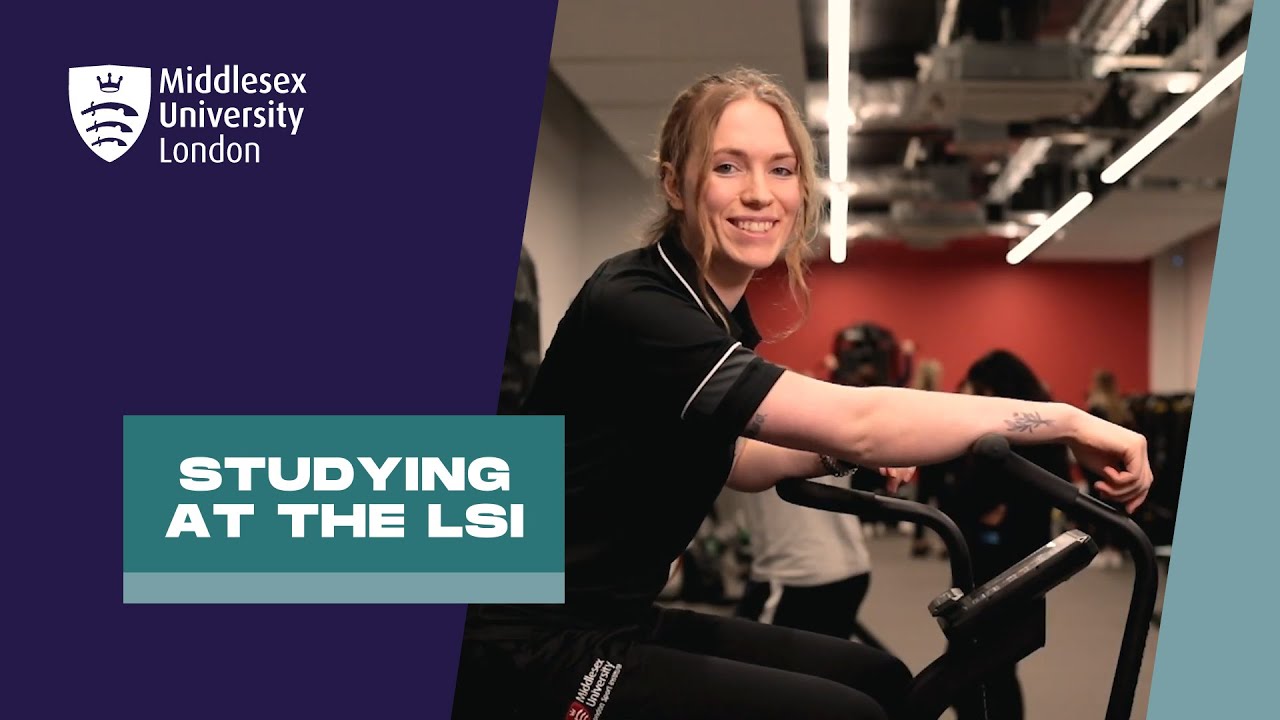
Teaching
You will gain knowledge and understanding through a variety of approaches, encouraging digital literacy, utilising live research informed teaching and practice-led learning sessions, engaging with pre-recorded content, seminars, workshops, problem solving tasks, small group discussions & presentations, student and teacher led learning sessions and finally, via student placements. An understanding of the subject is assessed in both summative and formative methods. You will be encouraged to participate in curriculum design and lead student communities via co-leadership opportunities throughout the academic year such as group learning, student forums, programme voice groups and an ability to co-design your research methods and dissertation assessments.
You will gain knowledge, understanding and practical skills through lectures, participatory seminars, small group discussions, directed learning, laboratory and practical sessions.
You will be assessed by a variety of methods including presentations, written assignments, laboratory reports, and practical demonstrations.
You will study at our north London campus, often at the Hatchcroft building, one of the UK's best-equipped laboratories.
Your timetable will be built around on campus sessions using our state-of-the-art professional facilities and labs, with online sessions for some activities where we know being virtual will add value. We’ll use technology to enhance all of your learning and give you access to online resources to use in your own time.
The table below gives you an idea of what learning looks like across a typical week. Some weeks are different due to how we schedule classes and arrange on campus sessions.
This information is likely to change slightly for 2024 entry as our plans evolve. You'll receive full information on your teaching before you start your course.
|
Learning structure |
|
Hours |
|
Tutor set learning activities |
Contact hours per week, per level: |
5 hours |
|
Average hours per week, per level: |
Average hours per week, per level: |
1.5 hours |
Outside of these hours, you’ll be expected to do independent study where you read, listen and reflect on other learning activities. This can include preparation for future classes. In a year, you’ll typically be expected to commit 1200 hours to your course across all styles of learning. If you are taking a placement, you might have some additional hours.
Definitions of terms
Live in-person on campus learning – This will focus on active and experiential sessions that are both:
- Led by your tutors including seminars, lab sessions and demonstrations We'll schedule all of this for you
- Student-led by you and other students, like small group work and presentations.
Tutor set learning activities – This covers activities which will be set for you by your tutor, but which you will undertake in your own time. Examples of this include watching online materials, participating in an online discussion forum, completing a virtual laboratory or reading specific texts. You may be doing this by yourself of with your course mates depending on your course and assignments. Outside of these hours, you’ll also be expected to do further independent study where you’ll be expected to learn, prepare, revise and reflect in your own time.
You will have access to state-of-the-art laboratories, equipped with a wide variety of equipment and software that they could expect to work with in an applied setting.
You may have access to dietary analysis software, and a lab simulation application that allows you to revisit and scaffold theoretical knowledge, complete discipline specific scenarios, and practice lab techniques in a virtual setting.
Relevant software packages related to study, such as statistical analysis programmes, and applications for word processing, spreadsheets, presentations, email, and note-taking etc., are available to use.
Sports and exercise science facilities
Access our state-of-the-art sports facilities at the West Stand, Stone X Stadium; benefit from our partnerships with Saracens Rugby Club, and access to placements at Tottenham Hotspur Foundation.
/148x0:2053x1610/prod01/channel_3/media/middlesex-university/courses-images/ug-courses/science-and-technology/sports/Sports-and-Exercise-Science-course-banner.jpg)
/148x0:2053x1610/prod01/channel_3/media/middlesex-university/courses-images/pg---course-masthead-images/2024X2f25/sport-sciences/Sport-and-Exercise-Science-(Strength-and-Conditioning)_BSc-Honours.jpg)
/296x0:1104x1030/prod01/channel_3/media/middlesex-university/courses-images/ug---course-masthead-images/2024X2f25/the-sports-institute/Sport-and-Exercise-Rehabilitation.jpg)
/528x0:4472x3333/prod01/channel_3/media/middlesex-university/courses-images/ug-courses/science-and-technology/sports/WestStand-7.jpg)
/1193x0:3807x3333/prod01/channel_3/media/middlesex-university/courses-images/ug-courses/science-and-technology/sports/WestStand-4.jpg)
/528x0:4472x3333/prod01/channel_3/media/middlesex-university/courses-images/ug-courses/science-and-technology/sports/WestStand-6.jpg)
/1193x0:3807x3333/prod01/channel_3/media/middlesex-university/courses-images/ug-courses/science-and-technology/sports/WestStand-8.jpg)
Careers
How can the MSc Sport and Exercise Nutrition support your career?
Whether you have experience as a sport and exercise scientist, strength and conditioning practitioner, personal trainer, nutritionist, dietician, physiotherapist, or you have recently graduated from an undergraduate degree in one of these areas – you will already have a range of career options available to you.
This postgraduate course has been written in consultation with leading industry experts such as the English Institute of Sport so is designed to equip you with the skills and experience desired by potential employers in the specific field of performance nutrition.
At the end of the degree you will have completed a minimum of 50 hours of professional practice and have the necessary knowledge and experience to apply to the graduate SENr – a qualification which will enable you to take the next step in your career.
You will be well placed to work in elite and professional sport, for national and international sports teams and organisations. Numerous private gyms, consultancies and other sport and exercise organisations also demand the expertise of specialist nutritionists, and there is significant space to work as a self-employed nutritional consultant.
Entry requirements
Qualifications
- Applicants must have a minimum of a 2:2 undergraduate degree in a related sports science, nutrition and/or dietetic field. Applicants with other degrees may be considered subject to industry experience on an individual basis.
- Ideally applicants will have one year's relevant experience in the sport and fitness industry.
If you have relevant qualifications or work experience, academic credit may be awarded towards your Middlesex University programme of study. For further information please visit our Recognition of Previous Learning page.
Further requirements
DBS (disclosure and baring service) is required for student placements*.
These checks will be explained and conducted during the first semester. Obtaining a successful DBS will enable you as a student to undertake a placement or work experience hours as agreed by the programme or module leader. An unsuccessful DBS or lack of a DBS, could hinder a student’s ability to achieve any placement hours and prohibit you from graduating with a full degree.
*May be required for MSC SPA and MSC S&C (DE).
Qualifications
We accept the equivalent of the below qualifications from a recognised overseas qualification.
- A 2:1 undergraduate degree in a relevant sports science related, nutrition and/or dietetic field
- We welcome applications from applicants with a 2:2 degree in any discipline
- Ideally applicants will have one year's relevant experience in the sport and fitness industry.
Find out more about the qualifications we accept from your country support page. If you are unsure about the suitability of your qualifications or would like help with your application, please contact your nearest regional office for support.
Further requirements
DBS (disclosure and baring service) is required for student placements*.
These checks will be explained and conducted during the first semester. Obtaining a successful DBS will enable you as a student to undertake a placement or work experience hours as agreed by the programme or module leader. An unsuccessful DBS or lack of a DBS, could hinder a student’s ability to achieve any placement hours and prohibit you from graduating with a full degree.
*May be required for MSC SPA and MSC S&C (DE).
Academic credit for previous study or experience
If you have relevant qualifications or work experience, academic credit may be awarded towards your Middlesex University programme of study. For further information please visit our Recognition of Previous Learning page.
Visas
You will not need a visa to study in the UK if you are a citizen of Iceland, Liechtenstein, Norway or Switzerland. If you are a national of any other country you may need a visa to study in the UK.
International students who require a Student route (formerly tier 4) visa to progress on a course at Middlesex University must apply for study on a full-time basis. However, this course is offered part-time so you are eligible to apply on a part-time basis.
Part-time study
International applicants can apply for Student route (formerly tier 4) visas for part-time postgraduate study (courses leading to a qualification at RQF level 7 or SCQF level 11 and above).
Student route visa students studying part-time are subject to certain restrictions:
- no work (paid or unpaid)
- no work placements as part of the programme
- no dependants
- no extending under Student route visa in the UK. This includes Student route visa applications to work as a Students' Union Sabbatical Officer or for the Foundation Programme for postgraduate doctors and dentists
- not eligible for the Student route visa Doctorate Extension Scheme
English language requirements
You must have competence in English language to study with us. The most commonly accepted evidence of English language ability is IELTS 6.5 (with minimum 6.0 in all components). We also normally require Grade C GCSE or an equivalent qualification. Visit our English language requirements page for a full list of accepted tests and qualifications.
If you don't meet our minimum English language requirements, we offer an intensive pre-sessional English course.
Applications for postgraduate study should be made directly to the university.
Interviews
Interviews may be required for candidates with a 2:2 undergraduate degree.
Register your interest
Sign up now to receive more information about studying at Middlesex University London.
Chat with a real student about life at MDX
See all students you can chat toFees and funding
The fees below are for the 2027/28 academic year.
UK students1
Full-time students: £11,500
Part-time students: £77 per credit
Part-time students: £37 per dissertation credit
International students2
Full-time students: £18,700
Part-time students: £125 per credit
Part-time students: £62 per dissertation credit
/0x41:1400x989/prod01/channel_3/media/middlesex-university/courses-images/ug---course-masthead-images/2024X2f25/the-sports-institute/Sport-and-Exercise-Rehabilitation.jpg)
/0x41:1400x989/prod01/channel_3/media/middlesex-university/courses-images/ug-courses/science-and-technology/sports/Sport-and-Exercise-Science-BSc-Honours.jpg)
/0x60:2200x1550/prod01/channel_3/media/middlesex-university/courses-images/ug-courses/science-and-technology/sports/Sports-and-Exercise-Science-course-banner.jpg)
/273x0:1628x918/prod01/channel_3/media/middlesex-university/courses-images/pg---course-masthead-images/2024X2f25/sport-sciences/Sport-Performance-Analysis2.jpeg)
/137x0:1764x1102/prod01/channel_3/media/middlesex-university/courses-images/pg---course-masthead-images/StrengthConditioning_herobanner.jpg)