

Interior Architecture students put creative skills to use for community
1 April 2026
/10x0:991x667/prod01/channel_3/media/middlesex-university/news-section-images/2026/2nd-year-students-with-Adaptive-Reuse-prototype1000X667.jpg)
Middlesex University projects range from reimaging a museum for local people to sustainable design
Interior Architecture students at Middlesex University have been working on several projects that develop their skills and support the local community, from sustainable design to re-imaging spaces in a North London church to house a new community museum.
Third-year students have been working on a project to redesign spaces in St Mary’s Church in Eversholt Street, Somers Town, which recently acquired funding for its preservation. This builds on work by last year’s cohort, which won the prestigious ‘Collaborative Practice’ category at the Interior Educators National Awards.
The students worked to a brief from The People’s Museum/ A Place for Us in Somers Town to transform the museum into A [New] Space for Us housed in an area of the church. The brief was to design a civic, cultural and community space that preserves and respects the building’s religious function while expanding its social purpose.
Students reported that working on a live brief to produce designs for the community was especially beneficial to developing their professional skills. Rachel Koh said: “I became more aware of how people use space in their daily routines, and how small spatial changes can support rest, care, and connection. It made my design decisions more closely tied to real social needs.”
Over six weeks, the 37 students designed a hybrid environment that serves different purposes: a social space for meeting and conversation, a learning/debating area, and an area for The People’s Museum’s collection of audio artefacts. Their designs, including technical drawings and models, were displayed at the museum earlier this year.
"Working with a live client, the People’s Museum, allowed me to develop a deeper understanding of site, community, and context, and how these inform design decisions. I particularly valued exploring the relationship between the client and the local area.”
/125x0:875x750/prod01/channel_3/media/middlesex-university/news-section-images/2026/Student-explaining-exhibits-at-Peoples-Museum1000X750.jpg)
Fellow student Alex Smith added: “I learned how architecture fosters connections between people and communities, and how these relationships shape the built environment. This has deepened my interest in designing for social causes.”
The project sits within the University’s Rough City Thinking Lab initiative, which encourages students to challenge the trend towards urban development that all looks the same, and instead design spaces that support community wellbeing, preserve cultural memory and balance heritage with new uses.
Jason Scoot, Programme Leader for Interior Architecture, said that, building on this momentum, further community projects involving students are already planned.
“Since working with The People’s Museum, our Interior Architecture students have produced a range of national award-winning projects, something we are incredibly proud of as a team. This success, combined with positive feedback, shows the work at Middlesex to develop the next generation of Interior Architecture specialists is being recognised.”
/125x0:875x750/prod01/channel_3/media/middlesex-university/news-section-images/2026/Visitors-learning-about-Peoples-Museum-exhibition1000X750.jpg)
Diana Foster, Director of the People’s Museum, said: “We’re delighted to work with Middlesex University’s Rough City Thinking Lab and see the innovative work of students unfold in our space.”
Deepika Kanthavara Madhava, Project Lead for the St Pancras and Somers Town Living Centre, said: “It was wonderful to see such good work around real-time community projects set within a grassroots organisation that works for its local voices.”
Meanwhile, second-year students have shown their own ingenuity, craftsmanship and commitment to the environment in an annual ‘Adaptive Reuse’ project which invited them to transform waste materials into objects where people could meet, sit, relax and eat.
Using the University’s workshop facilities, students designed and built tables, chairs and other objects entirely from recyclable materials sourced from waste on the Hendon campus. The project introduces ‘circular design’ principles, which encourage the elimination of waste and the reuse of existing resources, while developing an understanding of how materials behave, age and can be repurposed.
This year, student groups were given disused wooden stools alongside a variety of surplus materials, including wood, metal, foam and textiles from across the University. Working together, they developed and produced a range of inventive prototypes designed to support activities such as sitting, eating, working and meeting. Each piece demonstrated both technical skill and a commitment to extending the lifecycle of everyday objects.
Student Zahra Chaudhri said: “This project pushed me to think more creatively and sustainably, especially through experimenting with materials and developing ideas through prototyping. It was exciting to see our idea come to life, and I had fun working collaboratively.”
Aisha Alamin said: “Reusing materials from the University workshop strengthened my approach to sustainable design, while the photography workshops allowed me to explore more thoughtful and creative ways of documenting and communicating my work. It also pushed me to consider ergonomics and user experience while designing within the constraints of only available materials.”
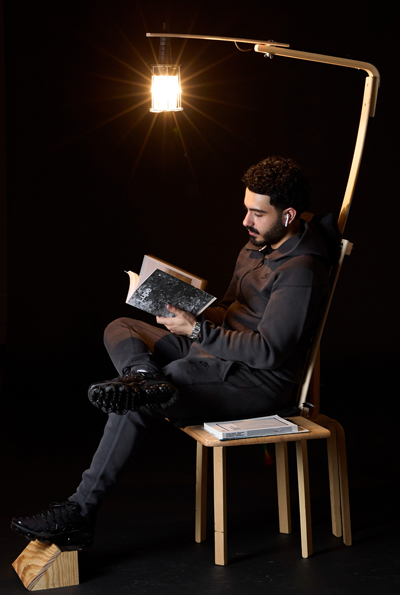
Fellow student Naz Duzgun added: “This project was a process of constant trial, error, and refinement. Through repeated testing, it gradually evolved into something we were genuinely proud of and I learned how small changes to my chair could significantly impact user experience and ergonomics.”
Jason Scoot said: “The act of making is central to Interior Architecture at Middlesex. By working directly with materials, students better understand how things come together and can make more informed design choices.
“Through our Adaptive Reuse project, students learn about sustainability in a hands-on way, making prototypes to test and refine their ideas while building confidence in their design decisions. Working in groups also helps them develop the communication and teamwork skills they’ll need in their future careers.”
Find out about studying Interior Architecture BA at Middlesex University
/8x0:1033x697/prod01/channel_3/media/middlesex-university/news-section-images/2026/MDX-Tax-and-Accounting-Clinic1.jpg)
/8x0:1033x697/prod01/channel_3/media/middlesex-university/news-section-images/2026/Drug-education-Porgamme2.jpg)
/8x0:1033x697/prod01/channel_3/media/middlesex-university/news-section-images/2026/Enactus-MDX-team-photo.jpg)