

Biomedical Science - Medical Immunology MSc
2027-28 Year of entry
Launch your career in Immunology and work for the NHS, pharmaceutical companies or research organisations when you qualify with our Biomedical Science MSc
/461x0:939x1030/prod01/channel_3/media/middlesex-university/courses-images/ug---course-masthead-images/202425/natural-sciences/Pharmaceutical-Sciences-BSc-Honours.jpg)
Why choose Biomedical Science (Medical Immunology) MSc at Middlesex?
This MSc programme will allow you to develop your knowledge and understanding of advance Immunological concepts.
On our master's degree you will learn about how the immune system protects the host from infection by microorganisms such as viruses and bacteria but how it can also, when deregulated, give rise to immune system disorders such as autoimmune disease.
You will learn how immunological reagents may be used as immunotherapeutics to treat cancers and inflammatory disease and how immunoassays are used in the diagnosis of disease.
We also cover the framework and vocabulary in essential and advanced aspects of Immunology.
What you will gain
You will learn analytical and technical skills that will prepare you for a career within the NHS, the private health sector, pharmaceutical industry, education, or to work in training or research.
You will work on your own research project, under supervision, which may lead to inclusion in a scientific publication, resulting in an improved research profile.
Specialist external lecturers will share their knowledge with you from their areas of expertise. This broadens your knowledge resources and network opportunities. For example, during your immunopathology module, you will be taught about how a recipient is matched to a donor kidney that has suddenly become available by the blood and transplant team at St. Georges Hospital Medical School.
You will be taught about the diagnosis of primary immunodeficiencies in children by a clinical scientist based in Great Ormond Street Children's Hospital and finally, you will be taught how to diagnose allergy and hypersensitivity by an expert in the area based at West Hertfordshire Hospitals NHS trust.
Accreditations
This programme is accredited by the Institute of Biomedical Science (IBMS).
Accreditation of this course is a recognition that it will provide qualified biomedical scientists, who are specialist practitioners or intend to specialise, with advanced knowledge and skills required for clinical practice.
Non-members are eligible for membership of the IBMS MSc after completing the course. However, the course in itself does not lead to registration with the HCPC as a biomedical scientist.
Your application
As part of our new Learning Framework update to postgraduate programmes, MSc Biomedical Science programmes are merging. This will allow you to specialise your award through the modules you pick. The following pathways will be available when applying for MSc Biomedical Science:
- MSc Biomedical Science (Cellular Pathology)
- MSc Biomedical Science (Clinical Biochemistry)
- MSc Biomedical Science (Haematology and Transfusion Science)
- MSc Biomedical Science (Medical Immunology)
- MSc Biomedical Science (Medical Genomics).
To apply for any of these specialisms, please apply through the standalone MSc Biomedical Science page.
3 great reasons to pick this course
Student stories and experiences
/0x3:218x152/prod01/channel_3/media/middlesex-university/mdx-voices-images/Muhammad-Kabir-mdx.jpg)
/50x0:4950x3333/prod01/channel_3/media/middlesex-university/student-life-section-images/Students-around-campus-w-vignette.jpg)
About your course
We will prepare you for a career in the diagnostic laboratories or the biotechnology sector, or for independent research careers in academia. You will complete a research project supervised by one of the university's research team members who specialize in Immunology.
The module aims to examine advanced bioanalytical techniques that are used in biomedical research, for the analysis of products, for improving disease understanding, and for the analysis of disease biomarkers. It also provides a detailed understanding of the principles, theory and practice of bioanalytical techniques, including safety, instrumentation, sample preparation techniques together with analysis and interpretation of analytical data.
This module aims to give students a solid understanding of ethical principles and their application in biomedical science, cardiology and pharmaceutical science. Students will learn key concepts like autonomy, beneficence, nonmaleficence, and justice, and how to apply these in real-world research and clinical practice. They will be encouraged to analyse and resolve ethical dilemmas using theoretical knowledge and decision-making models.
The module aims to provide you with the tools required to design effective and efficient experiments, and to test scientific hypotheses. The module will also equip you with the tools necessary for statistical analysis in a hypothesis testing context.
The module aims to equip students with knowledge of current theories and approaches for leading and managing people, resources, and processes to achieve organisational goals, preparing them for leadership roles or senior positions within organisations.
This module aims to develop your skills in the planning and execution of an analytical, laboratory-based study and critical evaluation of real research results drawing on your acquired knowledge from other modules. In addition, the module aims to develop your communication skills to enable you to communicate your findings in written and oral form.
This module aims to enable students to integrate their knowledge of a range of different clinical disorders in order to investigate, diagnose and monitor human health and disease. This is an essential skill that is required to be able to unravel the complex and fascinating nature of human disease.
Students will also learn to critically evaluate the most up-to-date treatments that are available to patients. The focus will be on key Biomedical Science areas including cellular pathology, haematology, clinical biochemistry, clinical genetics, medical microbiology and Medical Immunology.
Critical to all of this is an understanding of the procedures of quality control and quality assurance to ensure a high quality and consistent delivery of laboratory services.
This module aims to provide students with an in-depth knowledge of the concepts and language of Immunology. This will enable students to understand not only how humans respond to, and eliminate infection, but also tumours. Students will learn about the mechanisms by which tumours evade the immune response resulting in the growth of tumours that become detectable in the clinic.
With this combined knowledge, students will go on to gain an understanding of how current immunological therapeutics may be used to harness the anti-tumour effect of the host immune response as well as learn how these therapeutic agents may be used to down regulate the immune response in allergy and auto-immunity.
To find out more about this course, please download the Biomedical Science (Medical Immunology) MSc programme specification (PDF).
Teaching
The course is delivered by our experienced academics and industry partners in person and via digital platforms. Our learning activities include laboratory practicals, presentations, webinars, one-to-one tutorials and group projects.
You will be based at our north London campus and work in our state-of-the-art laboratories in the Hatchfield building.
Whether you are studying full or part-time – your course timetable will balance your study commitments on campus with time for work, life commitments and independent study.
We aim to make timetables available to students at least 2 weeks before the start of term. Some weeks are different due to how we schedule classes and arrange on-campus sessions.
In a typical year, you’ll spend about 1200 hours on your course.
Outside of teaching hours, you’ll learn independently through reading articles and books, working on projects, undertaking research, and preparing for assessments including coursework and presentations.
Typical weekly breakdown
A typical week looks like this:
|
Learning |
Hours per week |
|
On-campus |
6 |
|
Online |
6 |
|
Independent study |
3 |
Learning terms
On-campus: This includes tutor-led sessions such as seminars, lab sessions and demonstrations as well as student-led sessions for work in small groups.
Online learning: This is teaching that is delivered online using tools like Skype or Zoom, as well as work that you do yourself using online teaching resources.
Independent study: This is the work you do in your own time including reading and research.
Part-time study
You can also study this course part-time.
We have a strong support network online and on campus to help you develop your academic skills. We offer one-to-one and group sessions to develop your learning skills together with academic support from our library, IT teams and learning experts.
Your knowledge and understanding will be assessed formally and informally with seminar presentations, written assignments, laboratory reports, practical and theory exams. Your practical skills will be assessed by laboratory reports and research project work.
Each term, you'll get regular feedback on your learning.
Facilities and support
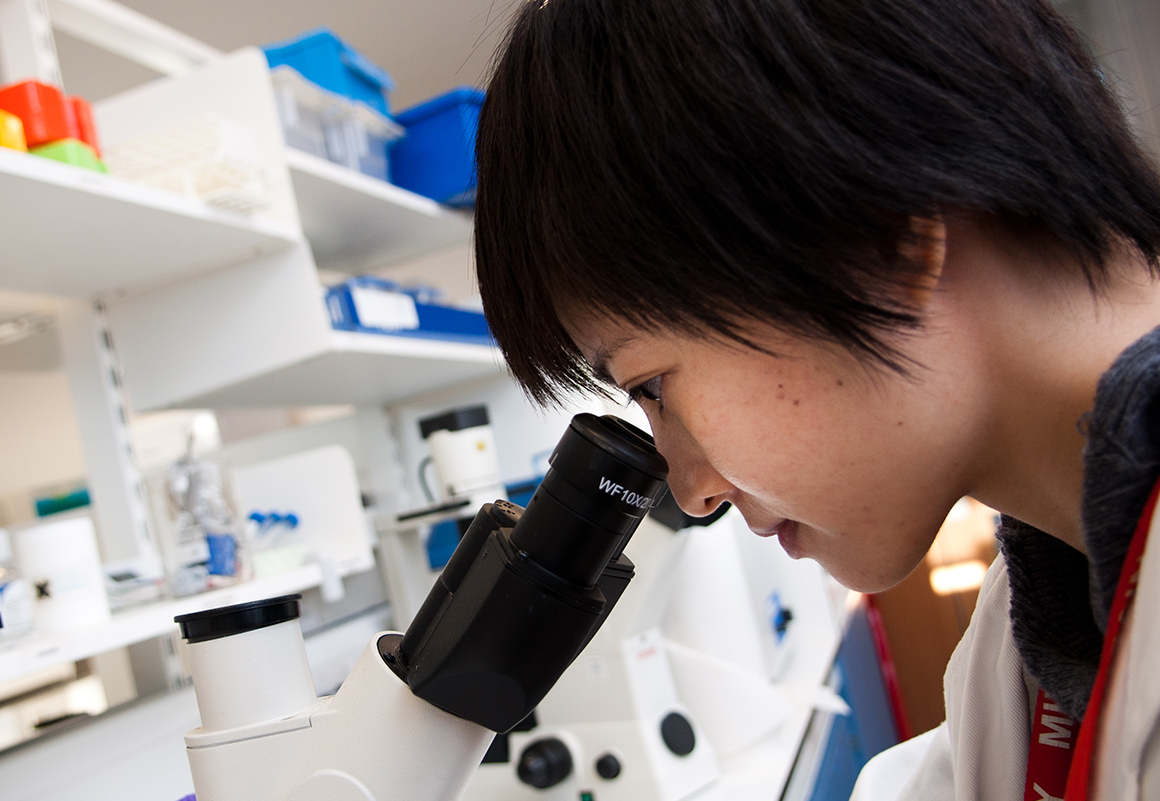
Cell and tissue culture lab
This lab focused on the culture of mammalian cell lines. Its outstanding facilities include:
- Biological safety cabinets for the sterile handling of cells
- Four phase-contrast microscopes
- Several atmosphere-controlled incubators for growing cells.
Use the lab to discover new biomarkers which can be used to detect disease, as well as in vitro models to determine the efficacy of many potential treatments for disease. This facility is essential to cancer, reproductive, stem cell and nano-pharmaceutics research at Middlesex.
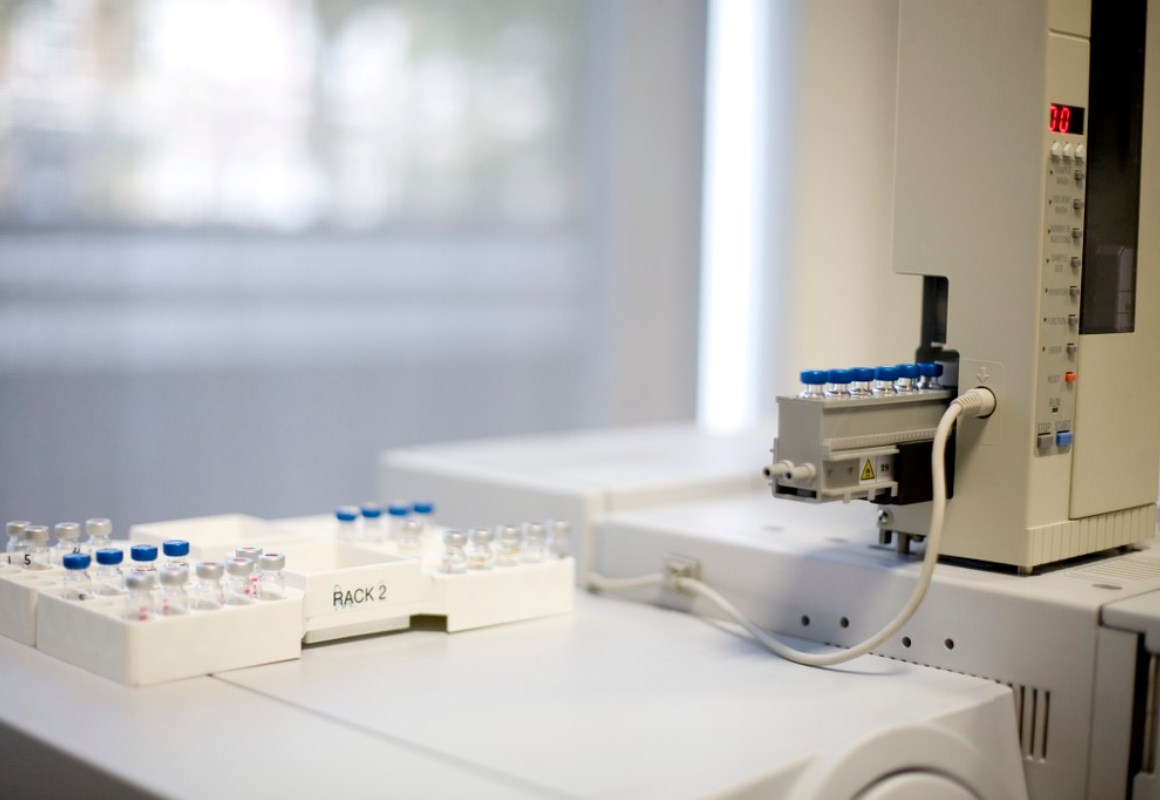
Flow cytometry facilities
We have two flow cytometers located within the laboratories in the Hatchcroft building. Students will be taught how to use flow cytometry to:
- Immunophenotype immune cells
- Determine apoptosis induced by cancer-treating drugs.
- Determine the impact of various hormones and growth factors on the proliferation and differentiation of cells of the immune response.
Mass spectrometry and analytical facilities
Our exceptional array of high-end equipment can support your research in:
- Investigative and diagnostic oncology
- Urban pollution control
- Biophysics and bioengineering
- Molecular biology
- Reproductive biology.
Microbiology and molecular biology labs
There's everything you need to develop advanced microbial techniques, infectious sample processing and the culture of microorganisms.
You can develop molecular biology techniques such as:
- Cloning and analysing DNA and RNA sequences
- Quantify RNA levels
- Separate DNA molecules.
You’ll be able to use industry-standard equipment including:
- A Leica SP2 confocal microscope for the high-resolution analysis of protein sub-cellular distribution
- Our tissue culture facility for the large-scale production of monoclonal antibodies and proteins.
- A Nikon live cell microscope system for time-lapse imaging.
Careers
How can the MSc Biomedical Science (Medical Immunology) support your career?
Biomedical Science represents the second-largest profession registered by the Health Professions Council and there is a high demand for well-qualified graduates. Our university's postgraduate courses have been recognised for their ability to support your career.
We are a top 10 UK University for employability (UniCompare Rankings 2025), and a top 10 UK university for industry connections and funding in Times Higher Education Young University Rankings 2024.
Career paths
Our graduates have progressed to senior NHS lab roles, research institutions, or pursue PhDs. Employers include Synnovis, NHS Trusts, UK Health Security Agency, GSK, UCB, and academic labs. This degree supports career steps from Specialist to Higher Specialist Practitioner and beyond.
Entry requirements
Qualifications
For this course, ideally, we are looking for these qualifications:
- A 2:2 honours degree or above and two or more years of relevant experience
If you have relevant qualifications or work experience, we may be able to count this towards your entry requirements.
We welcome students from the UK and all over the world. Join students from over 122 countries and discover why so many international students call our campus home.
- Quality teaching with top facilities plus flexible online learning
- Welcoming north London campus that's only 30 minutes from central London
- Work placements and networking with top London employers
- Award-winning career support to get you where you want to go after university.
Qualifications
We accept a wide range of qualifications across a variety of subject areas. Find out more about the accepted qualifications on your country's support page.
If you are unsure of the suitability of your qualifications or would like help with your application, please contact your nearest international office.
English language
You will need to meet our English language requirements. Don’t worry if you don't meet our minimum English language requirements, as we offer a Pre-sessional English course.
Visas
To study with us in the UK, you might need a student visa. Please check to see if this applies to you.
Apply as early as possible to make sure you get a place. You can submit your application before you receive your final qualification.
Find out how to apply for postgraduate taught courses and watch our step-by-step video.
Personal statements
Make sure that you highlight your best qualities in your personal statement that are relevant to this course. Such as forward-thinking, creative and collaborative.
Interviews
You won’t be required to attend an interview.
Register your interest
Sign up now to receive more information about studying at Middlesex University London.
Chat with a real student about life at MDX
See all students you can chat toFees and funding
The fees below are for the 2027/28 academic year.
UK students1
Full-time students: £11,500
Part-time students: £77 per credit
Part-time students: £37 per dissertation credit
International students2
Full-time students: £18,700
Part-time students: £125 per credit
Part-time students: £62 per dissertation credit
/0x41:1400x989/prod01/channel_3/media/middlesex-university/courses-images/ug---course-masthead-images/202425/natural-sciences/Pharmaceutical-Sciences-BSc-Honours.jpg)
/0x60:2200x1550/prod01/channel_3/media/middlesex-university/courses-images/ug---course-masthead-images/202425/science-and-technology/Medical-Science_BSc(Hons).jpg)
/0x41:1400x989/prod01/channel_3/media/middlesex-university/courses-images/ug-courses/Medical-Physiology-BSc-Honours.jpg)
/0x41:1400x989/prod01/channel_3/media/middlesex-university/courses-images/ug-courses/Foundation-Year-in-Science.jpg)
/138x0:1762x1100/prod01/channel_3/media/middlesex-university/courses-images/pg---course-masthead-images/202425/science-and-technology/Biomedical-Science-Clinical-Biochemistry_herobanner.jpg)
/0x60:2200x1550/prod01/channel_3/media/middlesex-university/courses-images/ug---course-masthead-images/202425/science-and-technology/Biological-Sciences-BSc-Honours-Masthead.jpg)
/19x0:2396x1610/prod01/channel_3/media/middlesex-university/courses-images/pg---course-masthead-images/msc-biomedical-science-banner.jpg)
/138x0:1762x1100/prod01/channel_3/media/middlesex-university/courses-images/pg-courses/Biomedical-Science-Haematology-and-Transfusion-Science_herobanner.jpg)