

Content Creation BA Honours
2026-27 Year of entry
Subject to validation
Craft compelling stories across media, build brands, captivate audiences and become a versatile content creator ready for today’s digital world.
/0x0:2200x1610/prod01/channel_3/media/middlesex-university/courses-images/ug-courses/arts-and-creative-industries/marketing-and-communications/Content-Creation-banner.JPG)
Why study Content Creation BA Honours at Middlesex?
On this course, you’ll master the art of creating engaging, innovative and shareable content across video, photography, podcasting, social media and immersive AR (Augmented Reality). You’ll develop both the creative spark to generate ideas, and the technical expertise to bring them to life using industry-standard tools.
You will graduate with a professional portfolio that showcases your abilities to produce social media campaigns, branded assets and digital content for different audiences and platforms. Alongside creative skills, you’ll gain entrepreneurial know-how, strategic thinking and the ability to manage your own digital presence.
- Designed for aspiring content creators, influencers, digital storytellers and media entrepreneurs who want to build a strong personal brand or create compelling content for clients.
- Gain real-world experience through optional work placements or a year-long industry sandwich placement, supported by our careers and employability service.
- Learn from staff with professional expertise in content design, branding and digital media, advertising and public relations, bringing real-world industry insight into your studies.
- Benefit from MDXStudios industry partners in London and beyond, such as Troubadour studios, giving you opportunities for first-hand industry experience, to network and showcase your work.
- Graduate with a professional portfolio and the entrepreneurial skills to thrive in the fast-moving world of digital content creation.
With opportunities for work placements and industry projects, you’ll leave Middlesex confident in your ability to collaborate, adapt and thrive in the fast-changing media landscape.
3 great reasons to pick this course
Student stories and experiences
/30x0:2385x1610/prod01/channel_3/media/middlesex-university/student-life-section-images/accommodation/014---Platt-Halls.jpg)
About your course
In your first year, you’ll build a strong creative foundation by developing ideas and content for print, web and social media. You’ll gain hands-on skills in digital design, photography, video and sound, while exploring how brands, culture and visual storytelling influence the way audiences engage with content. In the second year, you will deepen your expertise in analysing audience behaviours and conducting audience research, creating strong brand identities, developing effective strategic campaigns, and crafting compelling content for promotion and engagement. In the third year, you will stay up to date with cutting-edge AI tools in digital communication and marketing industries, and their applications in the fields. You’ll advance from creating and designing brand images and identities to managing brands and social media campaigns.
You will develop creative and technical skills to design and deliver impactful content using industry-standard tools. You will build strategic thinking, audience awareness and entrepreneurial skills, graduating with a professional portfolio and confidence to create and manage content for brands, clients or your own practice.
This module explores visual language and the fundamentals of effective communication, focusing on how meaning and narrative are created through images and design. Students are introduced to visual storytelling across print, photography and web design, developing design theory knowledge, professional practice and ethical, creative problem-solving skills.
This module focuses on the creative fundamentals of audiovisual communication, exploring how meaning and narrative are created through short-form video and audio. Through practice-based tasks, students develop production design, planning and recording skills, responding to briefs while demonstrating professional techniques and industry-standard best practice.
This module explores creative and strategic communication across platforms, focusing on how messages are designed for different audiences. Students develop skills in creating industry-relevant content using digital and analogue practices, responding to communication objectives while exploring ethical creative processes, emerging technologies and potential career pathways.
This module explores immersive experience through spatial design, presence, embodiment and participation. Through workshop-based production, students develop skills in spatial authoring, volumetric media and 3D content creation, preparing them to work with industry workflows across experiential sectors including fashion, tourism, sports and cultural heritage.
This module develops skills in designing user-centered mobile and web experiences. Students explore responsive and mobile-first design, information architecture, content design and accessibility, applying UX principles through structured design processes and prototyping. The module introduces content management practices and culminates in professionally informed mobile and web design outcomes.
This module explores the purpose, audience and expression of branded communication. Students learn to build a brand from the ground up, combining strategic thinking with personal insight to create distinctive graphic solutions for brand communication across a range of media.
This module develops skills in analysing and engaging audiences. Through workshops, case studies and practical seminars, students explore audience research methods, persona development and segmentation strategies, learning how insight-driven understanding supports effective messaging across communication contexts.
This module introduces podcasting through hands-on audio production. Students develop skills to plan, produce and refine podcast content, engaging with contemporary industry practices, ethical considerations and commercial contexts to create innovative audio productions for targeted audiences.
This module develops advanced skills in planning and managing professional social media campaigns. Students explore social commerce, influencer activity and audience engagement through industry-style simulations, designing and evaluating multi-platform content using structured workflows, analytics and social listening to inform evidence-based, strategically focused campaign decisions.
This module develops advanced skills in designing mixed-reality experiences combining spatial computing, real-time media and interactive technologies. Students explore applications across virtual production, simulation, digital fashion and experiential marketing, engaging with ethical and regulatory considerations. The module culminates in a professionally documented mixed-reality project demonstrating conceptual and technical integration.
This module supports students in developing an independent, industry-facing major project. Students apply specialist skills to a self-directed brief, producing a substantial body of work that reflects creative identity, professional ambition and critical understanding, while demonstrating autonomy, ethical awareness and engagement with industry contexts.
This module develops professional skills and employability for the creative industries. Students explore career pathways while working on real-world projects with industry professionals, building communication, collaboration and project management skills. The module emphasises client engagement, responding to briefs, managing timelines and delivering high-quality design solutions.
Optional module students can take in semester one or two 2 of levels 5 and/or 6.
*Can be taken instead of any ‘compulsory*’ taught module of the same number of credits.
Students can complete up to 60 credits of placement modules across levels 5 and 6.
This course is subject to validation. We will publish a full programme specification here when it is validated.
Teaching
You will learn from an experienced teaching team with strong professional backgrounds, bringing real-world insight directly into the classroom. Teaching is hands-on and interactive, combining practical work with industry-standard software alongside seminars, workshops and tutorials where you’ll test ideas, experiment creatively and collaborate with fellow students. The course offers an immersive, practice-based learning experience designed to reflect how content is created in professional settings. You’ll work collaboratively on creative projects, respond to briefs and develop the skills employers value, with opportunities to gain hands-on experience through dedicated work experience modules in years two and three.
This course is taught through group sessions (tutorials/learning groups) using inclusive approaches, practice-led guided learning via project briefs, situated learning experiences with industry professionals and industry visits, reflection on personal and cultural experiences. You will be involved in problem-solving, task-based learning, writing in academic, creative and professional genres, creative production workshops and technical inductions to software and equipment, creative project work, tutorials and continuous developmental feedback, guided and independent study and research.
You will typically have ten to twelve hours of timetabled classes per week, in addition to regular one-to-one tutorials with lecturers and a range of tutors from services such as the Learning Enhancement Team, Library and MDX Works. You will benefit from personalised support from your academic advisor.
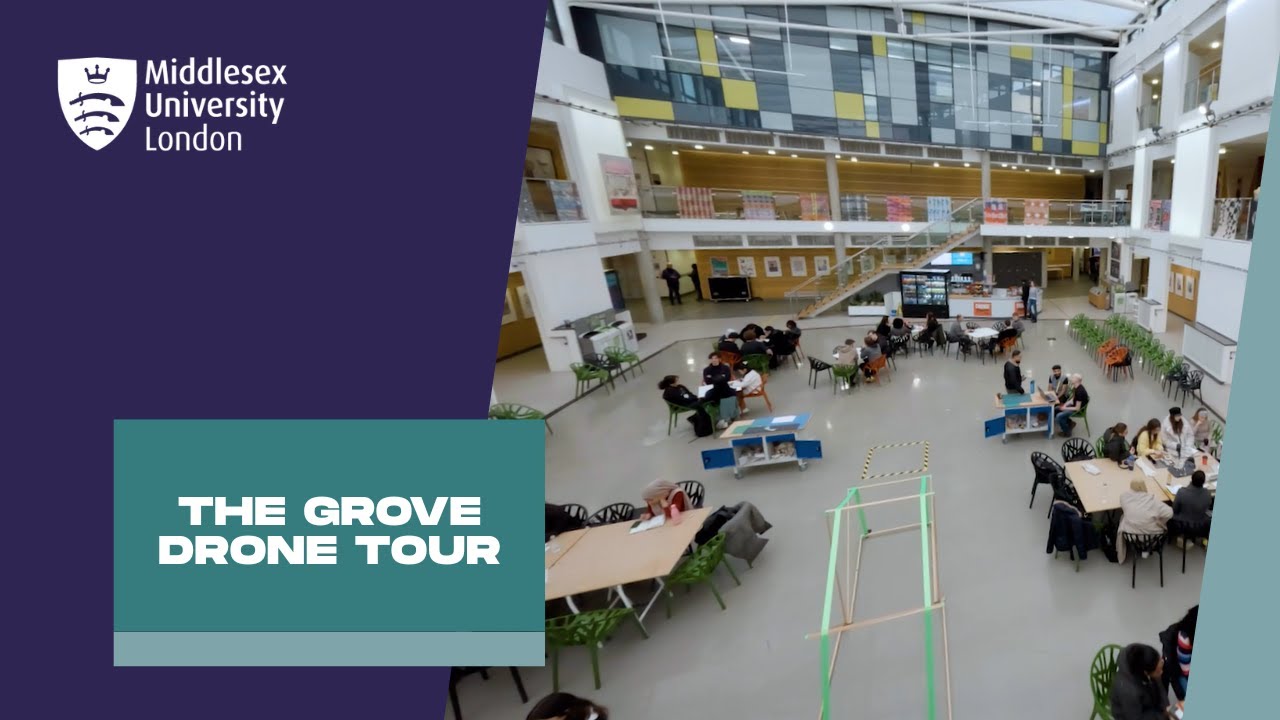
You will be studying at our north London campus in Hendon.
During your first year, your weekly timetable will typically consist of:
- 3 hours of engaging interactive sessions
- 7 hours of practical classes and workshops
- 1 hour of tutorials
- 1 hour of group work
In years 2 and 3 your weekly timetable will typically consist of:
- 2 hours of engaging interactive sessions
- 6 hours of practical classes and workshops
- 1 hour of tutorials
- 1 hour of group work
When not attending your teaching, sessions mentioned above, you will be expected to continue learning independently through self-study. Typically, this will involve reading journal articles and books, working on projects, undertaking research, and preparing for assessments including coursework, presentations and examinations. Your independent learning is supported by the facilities available including the library and Study Hub, laptop hire, and with online materials in MyUniHub (see student support section below).
Here is an indication of how you will split your time:
Year 1
| Hours | Typical activity |
|---|---|
| 288 | Teaching, learning and assessment |
| 912 | Independent learning |
Year 2
| Hours | Typical activity |
|---|---|
| 240 | Teaching, learning and assessment |
| 960 | Independent learning |
Year 3
| Hours | Typical activity |
|---|---|
| 240 | Teaching, learning and assessment |
| 960 | Independent learning |
Whether you are studying full or part-time – your course timetable will balance your study commitments on campus with time for work, life commitments and independent study.
We aim to make timetables available to students at least 2 weeks before the start of term. Some weeks are different due to how we schedule classes and arrange on-campus sessions.
You will have access to academic support services that you assist you in the following areas;
- Study Skills, including academic writing, reading and numeracy skills.
- Employability, with workshops and tutorials on CV writing, interview and presentation skills.
- Library Support, including sessions on finding, and choosing the right resources and software and
- tutorials on referencing and plagiarism.
- Progression and Support Advisors to assist you with if you experience difficulties with your studies.
- Well-being Services.
These services can be accessed through the UniHelp Desk in the Library building.
You will be assessed 100% by coursework. You will complete a variety of assessment formats, ensuring you will have ample opportunity to showcase what you have learnt and what you can do.
Assessments include:
- Visual and audio storytelling through photography, print design, video and audio production, AR (augmented reality) experiences, and podcasts
- Producing promotional media texts such as brand identities, press releases, advertisements, and social media content
- Designing and implementing social media campaigns
- User-centric design of apps and websites
- Creating personal branding elements like online profiles
- Completing group and individual writing and creative projects
- Conducting research projects and presentations
- A major project.
This comprehensive approach ensures that you will develop practical skills and industry-relevant experience.
You will receive feedback on the formative assessment, and written summative assessments. Feedback on examination performance can be requested from the module leader. Feedback is intended to help you learn and progress, and you are encouraged to review and discuss your feedback with your module or personal tutor.
We will aim to provide you with feedback within 15 working days of submission.
Details of progression and pass marks for assessment can be found in the university regulations.
Facilities
/173x0:907x620/prod01/channel_3/media/middlesex-university/courses-images/ug-courses/arts-and-creative-industries/fashion/Grove-Building-Facilities-Computer-Suites.jpg)
/168x0:533x466/prod01/channel_3/media/middlesex-university/courses-images/pg-courses/Motion-Capture-Green-Screen-2.jpg)
/530x0:4487x3344/prod01/channel_3/media/middlesex-university/courses-images/ug-courses/arts-and-creative-industries/film-animation-and-games/film/Film-students.jpg)
Careers
How can the Content Creation BA Honours support your career?
This course prepares you for a wide range of careers in content creation, digital media and brand communication. Graduates may progress into roles such as content creator, social media specialist or manager, digital marketing executive, copywriter, community manager, web content developer or creative advertising professional. You may also choose to work freelance, build your own brand, run a creative business or agency, or progress to postgraduate study in media, communications or marketing.
Graduates from related media and creative programmes at Middlesex have gone on to work in roles including content and social media manager, creative copywriter, PR account executive, community manager and account manager, with employers such as Adidas, TBWA, Compass Group and Marin Software.
Placements
You can take our flexible 15 or 30 credit Work Experience module in years two and/or three to gain substantial experience in your chosen field and launch your career. You can also choose to undertake a year-long work experience placement between Years 2 and 3.
In addition to formal work experience modules, you will be responding to live briefs and working with industry clients and guest speakers throughout your studies.
Entry requirements
At Middlesex, we're proud of how we recognise the potential of future students like you. We make fair and aspirational offers because we want you to aim high, and we’ll support you all the way.
Qualifications
- UCAS points
- 80-112 UCAS Tariff points
- A Levels
- BB-BBC
- BTEC
- MMP-DMM
- Access requirements
- Overall pass: must include 45 credits at level 3, of which all 45 must be at Merit or higher
- Combinations
- A combination of A-Level, BTEC and other accepted qualifications that total 80-112 UCAS Tariff points
We'll accept T Levels for entry onto this course (and our extended courses with a foundation year) with GCSEs in line with UCAS tariff calculation.
We’ll always be as flexible as possible and take into consideration any barriers you may have faced in your learning. And, if you don’t quite get the grades you hoped for, we’ll also look at more than your qualifications. Things like your work experience, other achievements and your personal statement.
If you have relevant qualifications or work experience, we may be able to count this towards your entry requirements.
Our entry requirements page outlines how we make offers.
Transferring courses
If you have a qualification such as a foundation degree or HND or have completed terms at another university, you may be able to join us in year two or three. Find out how to transfer courses.
Mature students (over 21)
You can apply at any age, even without formal qualifications, provided you can demonstrate relevant experience and ability.
Foundation year
If you don't meet the entry requirements, why not consider our Foundation Year in Arts and Creative Industries to help you prepare for the full degree?
We welcome students from the UK and all over the world. Join students from over 122 countries and discover why so many international students call our campus home:
- Quality teaching with top facilities plus flexible online learning
- Welcoming north London campus that's only 30 minutes from central London
- Work placements and networking with top London employers
- Award-winning career support to get you where you want to go after university.
Qualifications
We accept a wide range of international qualifications. Find out more about the accepted qualifications on your country's support page. If you are unsure of the suitability of your qualifications or would like help with your application, please contact your nearest international office.
English language
You will need to meet our English language requirements. And, don’t worry If you don't meet our minimum English language requirements, as we offer a Pre-sessional English course.
Visas
To study with us in the UK, you might need a Student visa. Please check to see if this applies to you.
Please apply via UCAS.
Need help with your application? Check out our undergraduate application page.
Personal Statement
Find out how to make a an effective personal statement.
Interviews
You won't be required to interview for this course.
Register your interest
Sign up to receive the latest information about studying at Middlesex University London.
Our communications are designed to support you in deciding your future and keep you up to date about student finance, employment opportunities and student activities available at Middlesex University.
Chat with a real student about life at MDX
See all students you can chat toFees
The fees below refer to the 2026/27 academic year.
UK students1
Full-time: £9,790*
Part-time: £81 per taught credit
International students2
Full-time students: £17,200
Part-time students: £143 per taught credit
*Changes to tuition fees from the 2026-2027 academic year for UK undergraduate students
For the 2026/27 academic year, the maximum annual tuition fee applicable to UK undergraduate students for approved providers will increase to:
- £9,790 for standard full-time courses
- £11,750 for full-time accelerated courses
- £7,335 for part-time courses
For courses with an integrated foundation year, the first-year fee is £9,790 for courses in science, engineering and creative and performing arts, and £5,760 for classroom-based courses.
Maintenance loans will also rise each year in line with inflation.
Accordingly, these are the fees that will be charged by the University for UK undergraduate students in the 2026/27 academic year subject to parliamentary approval taking place in early 2026.
UK Government information on tuition fees for UK undergraduate students in the 2027/2028 academic year
The changes below will apply from 1 August 2027. The government intends to lay regulations implementing these changes in early 2026 and will be subject to Parliamentary procedure. Further information can be found at GOV.UK's tuition fee changes webpage.
For the 2027/28 academic year, it is anticipated that the maximum annual tuition fee applicable to UK undergraduate students for approved providers will increase to:
- £10,050 for standard full-time courses
- £12,060 for full-time accelerated courses
- £7,530 for part-time courses
This means that if you start your studies in September 2026 on a standard full-time course, you will pay an annual tuition fee of £9,790 for your first year which will then rise to £10,050 for your second year of study starting in September 2027.
Subsequent tuition fee rises for UK undergraduate students
Depending on the duration of your study, your tuition fees for subsequent academic years beyond the 2027/28 academic year may therefore be subject to further inflationary increases by the UK government in due course. This means that the fee set out above is likely to be increased again for the 2028/29 academic year.
Any annual increase in tuition fees as provided for above will be notified to students directly in writing at the earliest opportunity in advance of the academic year to which the rise may apply.
/0x60:2200x1550/prod01/channel_3/media/middlesex-university/courses-images/ug-courses/arts-and-creative-industries/marketing-and-communications/BA-Content-Creation-1.jpg)
/235x0:1658x964/prod01/channel_3/media/middlesex-university/courses-images/ug---course-masthead-images/2024X2f25/arts-and-creative-industries/Advertising-pr-branding-1893X964.jpg)
/47x0:5783x3886/prod01/channel_3/media/middlesex-university/courses-images/ug---course-masthead-images/2024X2f25/business-and-law/digital-media-and-communications-banner-2025.jpg)
/0x61:2200x1551/prod01/channel_3/media/middlesex-university/courses-images/ug-courses/arts-and-creative-industries/fashion/BA-Fashion-Marketing.jpg)
/8x0:993x667/prod01/channel_3/media/middlesex-university/student-life-section-images/life-on-campus/Students-studying1000X667.jpg)
/12x0:1488x1000/prod01/channel_3/media/middlesex-university/courses-images/pg---course-masthead-images/MA-User-Interface-and-User-Experience-(UI-UX)-Design-1.jpg)
/0x59:2202x1551/prod01/channel_3/media/middlesex-university/courses-images/pg---course-masthead-images/2024X2f25/business-and-law/Welcome-Student-Portrait-Julia-16-492.jpg)
/0x75:2048x1462/prod01/channel_3/media/middlesex-university/courses-images/pg---course-masthead-images/MA-Digital-Media-and-Content-Creation.jpg)