

/0x346:2203x1264/prod01/channel_3/media/middlesex-university/study-section-images/subjects/biological-and-biomedical-sciences/biological-biomedical-sciences-subject-header.jpg)
Biological and Biomedical Sciences Courses
Study biological and biomedical sciences in state-of-the-art laboratories with opportunities to gain practical clinical, research and industry experience. Explore all undergraduate and postgraduate pathways to find the right route for your future career.
Why choose us?
Our biological and biomedical sciences courses explore how living systems function at every level from molecules to ecosystems, and from health to disease. You’ll gain a solid foundation in biology, chemistry and laboratory techniques before specialising in your chosen field.
We have a range of postgraduate programmes available for you to progress in biomedical sciences, pharmaceutical science, public health and cancer, biology and therapeutics with integrated placements, ensuring you gain experience in industry.
star Accredited degrees
Many of our biomedical science courses are accredited by the Institute of Biomedical Science (IBMS) and professional standards.
biotech Cutting-edge labs
Our purpose-built facilities within our £36 million Hatchcroft Building, which includes more than 30 specialised bioscience laboratories.
nature_people Industry and NHS partnerships
Offering opportunities for placements, applied projects and guest teaching from practising healthcare professionals.
apartment North London location
Our campus places you close to hospitals, research institutes, start-ups and pharmaceutical organisations across London.
Courses in biological and biomedical sciences
- Biomedical Science BSc Honours
- Healthcare Science (Audiology) BSc Honours
- Healthcare Science (Cardiac Physiology) BSc Honours
- Medical Physiology BSc Honours
- Medical Science BSc (Hons)
- Pharmaceutical Sciences BSc Honours
- Biomedical Science (Cellular Pathology) MSc
- Biomedical Science (Clinical Biochemistry) MSc
- Biomedical Science (Haematology and Transfusion Science) MSc
- Biomedical Science (Medical Genomics) MSc
- Biomedical Science (Medical Immunology) MSc
- Biomedical Science (Medical Microbiology) MSc
- Pharmaceutical Sciences MSc
- Public Health MSc/PGDip
/0x170:2415x1440/prod01/channel_3/media/middlesex-university/courses-images/pg---course-masthead-images/msc-biomedical-science-banner.jpg)
Facilities
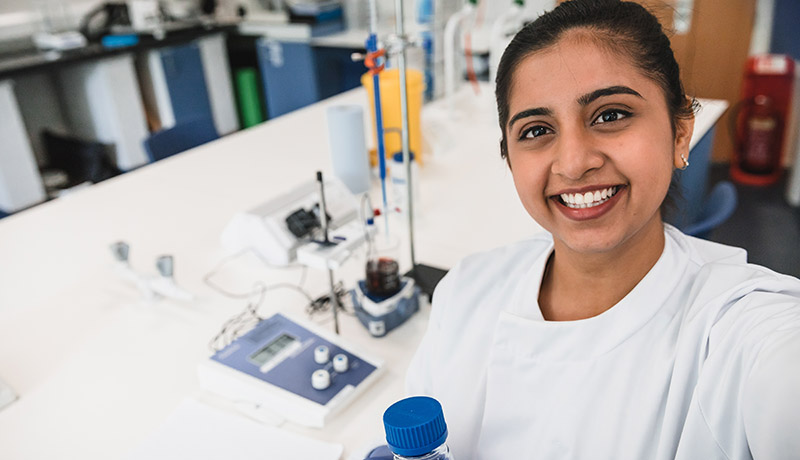
You will study in our £36m Hatchcroft Building, home to our specialist bioscience and medical science facilities. These include over 30 modern laboratories designed for both teaching and applied research, such as:
- A bio-modelling centre
- Mass spectrometry suites
- Fluorescence microscopy labs
- Microbiology and molecular biology laboratories equipped for DNA, protein and cell analysis
- Controlled environments for clinical and physiological measurements
Our spaces are designed to reflect professional laboratory settings, helping you develop technical, analytical and digital skills that align with employer expectations across bioscience industries.
/0x71:1000x597/prod01/channel_3/media/181---Students-around-campus.png)
Industry experience and partnerships
Many of our courses are accredited by the Institute for Biomedical Science (IBMS). This provides the foundation for registration with the Health Care Professions Council (HCPC), preparing you for a career in the healthcare and medical sectors.
You’ll also benefit from:
- Opportunities for NHS placements and observational experiences (course dependent)
- Guest sessions from practising healthcare and research professionals
- Projects connected to real clinical and laboratory challenges
- Modules shaped by current industry practice and scientific developments.
News
“The support you receive is excellent. I found that lecturers are at hand and you can always drop them an email or find them in the office. It might take a bit of initiative, but you can always find them and get the help you need. A lot of the lecturers are involved in their own research if they're not teaching, so they supervise students during their dissertations through their own research. The things you're being taught and learning for your dissertation often come straight from the research they're doing that they're really passionate about and are experts in, so you're in good hands.”
Careers and employability
Our degrees develop your scientific knowledge, laboratory expertise and analytical skills needed for a wide range of professional roles across healthcare, bioscience, diagnostics and research. Graduates progress into roles such as:
- Biomedical scientist
- Healthcare science practitioner
- Clinical technologist
- Research scientist or research assistant
- Molecular biology or microbiology technician
- Biochemistry or pharmaceutical analyst
- Public health officer
- Scientific project support roles in charities, universities and health organisations.
Throughout your studies, you’ll have opportunities to apply your learning through practical lab work, placements and employer-informed modules, helping you build experience relevant to your chosen pathway.
You’ll build transferable skills in laboratory methods, data analysis, scientific communication, and professional practice, all valued by employers across the life sciences. Our graduates have gone on to work for organisations including Anthony Nolan Trust, The Institute of Cancer Research, GSK, CEGX, Frontiers, and the NHS.
Entry requirements and how to apply
At Middlesex, we're proud of how we recognise the potential of future biological and biomedical science students like you. We make fair and aspirational offers because we want you to aim high, and we’ll support you all the way.
General requirements for biological and biomedical science courses
Undergraduate: 80-112 UCAS tariff points and GCSE English and Maths. A Levels (or equivalent) in biology and chemistry are preferred.
Postgraduate: A relevant science or biomedical degree required for MSc entry. For research degrees (MPhil/PhD), a strong academic background in life sciences is essential.
Please refer to each biological and biomedical science course for specific entry requirements.
How to apply
Please refer to each biological and biomedical science course for information on how to apply.

/0x330:1060x1271/prod01/channel_3/media/middlesex-university/study-section-images/subjects/biological-and-biomedical-sciences/biomedical-student-experience.jpg)
Student experience and community
Your experience goes far beyond the classroom. You’ll be part of an active community where you can build connections, test ideas and make the most of university life.
You’ll engage from students and alumni who have taken placements, and graduate roles in the UK and around the world to inspire you as you plan your own path. Many courses include work placements, check your individual course page for more information.
Take your next step
/0x422:6048x3611/prod01/channel_3/media/middlesex-university/courses-images/ug-courses/science-and-technology/natural-sciences/Natural-Sciences.jpg)
Book an open day
Join us on campus or online to hear what it's like to be part of our community of staff and students here at Middlesex University London.
/0x418:6000x3582/prod01/channel_3/media/middlesex-university/study-section-images/MDX_Campaigns-(1).jpg)
Request your prospectus
Take your first step to the future you want with our guide to Middlesex.
/0x225:2200x1385/prod01/channel_3/media/middlesex-university/clearing/students-on-campus.jpg)
Chat with students
Chat to our current course ambassadors and ask them any questions you have about studying at Middlesex.
/0x223:2210x1388/prod01/channel_3/media/middlesex-university/about-us-images/events/Reseach-conference-2025.jpg)
Get in touch
Have a question for us? Here you can find the relevant contact details for a member of our staff who can help you.