

/0x347:2200x1264/prod01/channel_3/media/middlesex-university/study-section-images/subjects/engineering-and-technology/engineering-technology-subject-header.jpg)
Engineering and Technology Courses
Study accredited engineering and technology degrees in London that combine hands-on lab experience with real industry projects, build the practical skills employers want.
Why choose us?
Our degrees combine engineering, design and mathematics. They are geared to provide you with industry-standard practical experience to ensure you are career ready upon graduation.
For undergraduate students, you can choose to study a range of areas including design, mechatronics, robotics or electrical engineering technology related courses. Postgraduate study will allow you to progress onto specific areas of study such as engineering management, electronic engineering, systems engineering or building information modelling management.
Our modules are built with interdisciplinary practice in mind. You will learn many different areas of engineering and technology and can work with students on different courses. This will prepare you for a wide range of career opportunities, as well as provide opportunities to specialise in areas you enjoy.
checklist Accredited degrees recognised by industry
Through bodies such as the Institute of Engineering Designers (IED) and the Engineering Council, helping you work towards IEng or CEng status.
laptop_mac Industry-standard labs and equipment
Including Siemens, FESTO and National Instruments technologies, giving you hands-on experience that matches real engineering workplaces.
task Live industry projects and placement opportunities
With students gaining experience on real briefs and collaborations involving partners such as the London Digital Twin Research Centre.
workspaces Strong graduate destinations
With previous students going on to work with organisations such as Apple, Dyson, Lego and Titan Motorsport.
Courses in engineering and technology
- Electronic Engineering MSc
- Engineering Management MSc
- Mechatronic Systems Engineering MSc
- Building Information Modelling Management and Sustainable Digital Delivery MSc
- Professional Practice in Maritime Operations PGCert
/0x103:1000x629/prod01/channel_3/media/middlesex-university/study-section-images/subjects/engineering-and-technology/Hands-on-learning-robotics-_-11.jpg)
Facilities
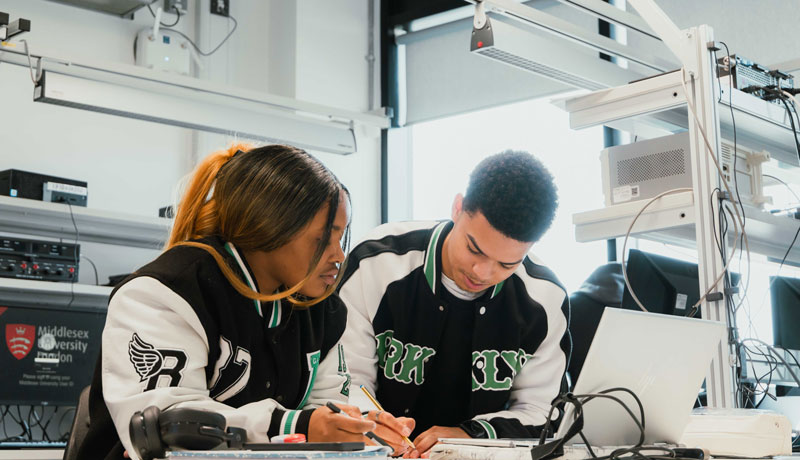
Our Engineering and Technology facilities are designed around practice-based learning, using industry-standard hardware, software and training materials so you’re “lab ready” for an accredited engineering or technology role. You’ll have access to:
- Mechatronics and Robotics Laboratories equipped with National Instruments LabVIEW, Festo and Siemens Connected Curriculum technologies, supporting learning in robotics, automation and control systems.
- A Smart Factory Lab, jointly sponsored by Festo and Siemens, where you can explore Industry 4.0 automation and digital manufacturing.
- Cisco and Xilinx-equipped labs for electronics, embedded systems and digital design.
- 3D printing, CAD/CAM workshops and product design studios for prototyping, testing and refining your ideas.
- Digital Twin and BIM simulation suites that support advanced research, sustainable design and postgraduate study in building information modelling and systems engineering.
/0x71:1000x597/prod01/channel_3/media/181---Students-around-campus.png)
Industry experience and partnerships
Our engineering and technology courses are shaped with professional bodies and employers, ensuring your learning is aligned with industry standards and emerging technologies.
- Degrees are professionally accredited by bodies such as the Institute of Engineering Designers (IED) or the Engineering Council, giving you confidence that your engineering degree meets recognised benchmarks and supports IEng/CEng registration.
- We maintain partnerships with companies such as Siemens and FESTO, giving you access to real-world projects and training materials used by engineers in industry.
- You’ll benefit from links with professional organisations, along with guest lectures from design and engineering experts.
- Many courses offer placement years, employer-linked group projects and live briefs, helping you to connect your engineering and technology degree with real roles in sectors like manufacturing, transport, construction and energy.
- You’ll have opportunities to enter prestigious competitions such as WorldSkills UK, and to get involved in high-profile events like New Scientist Live and the Skills Show at the NEC.
News
“A great aspect of this course was the practical approach to learning, where the theory was put straight away into practice. I really enjoyed the process of transforming a concept into an actual object and the project-based nature of the course means that it is always diverse and fun. The facilities that we had access to were great. I often used the laser cutter, putting into practice the Solidworks (CAD software) skills that we learned. I find it very helpful in my projects, especially developing prototypes.”
Careers and employability
An engineering or technology degree from Middlesex prepares you for high-demand roles across multiple sectors, from robotics and automation to construction, energy, healthcare and transport.
Roles include:
- Engineer, robotics developer or systems engineer
- Energy consultant or sustainability specialist
- Technology manager, project manager or operations manager
- Researcher or technical consultant
Our graduates have gone on to work for companies such as:
- Titan Motorsport
- Ashridge Engineering
- Tevva eTrucks
At postgraduate level, you’ll be well-positioned for more senior roles including engineering manager, production manager, operational manager, site manager or technical manager in organisations of all sizes, from start-ups to global employers.
We have an extensive network of graduates in professional practice around the world in companies such as Apple, Dyson, Airbus and Lego.
Recent student/graduate successes include:
- Mohamed Shaat: Siemens Connected Curriculum Prize, Overall Winner [BEng Mechatronics graduate, 2024].
- Mikhaela Roy: World Skills UK Industry 4 National Final Competition winner, also part of Team UK for Industry 4 at WorldSkills International 2024, Lyon, France [BEng Hons Mechatronics graduate, 2023].
- Harry Miller-Adams: winner of the Product Design category in the Arts Thread 2023 Global Graduate Design Show in collaboration with Gucci, [BA Product Design graduate, 2023].
Entry requirements and how to apply
At Middlesex, we're proud of how we recognise the potential of future engineering and technology students like you. We make fair and aspirational offers because we want you to aim high, and we’ll support you all the way.
General requirements for engineering and technology courses
Undergraduate: 80-112 UCAS tariff points. Most courses require a BB-BBC including a C or above from a numerate subject or science.
Postgraduate: 2:2 or above in an engineering or a numerate discipline, or relevant work experience in an appropriate field.
Please refer to each engineering and technology course for specific entry requirements.
How to apply
Please refer to each engineering and technology course for information on how to apply.

/0x325:1060x1266/prod01/channel_3/media/middlesex-university/study-section-images/subjects/engineering-and-technology/Hands-on-learning-robotics-_-07.jpg)
Student experience and community
Your experience goes far beyond the classroom. You’ll be part of an active community where you can build connections, test ideas and make the most of university life.
You’ll engage from students and alumni who have taken placements, and graduate roles in the UK and around the world to inspire you as you plan your own path.
Take your next step
/14x0:1266x660/prod01/channel_3/media/middlesex-university/study-section-images/subjects/computing-and-digital/computing-digital-callout-card.jpg)
Book an open day
Join us on campus or online to hear what it's like to be part of our community of staff and students here at Middlesex University London.
/0x95:1160x707/prod01/channel_3/media/middlesex-university/courses-images/ug-courses/science-and-technology/computer-science/Computing-and-Communication-Engineering-Labs-body.jpg)
Request your prospectus
Take your first step to the future you want with our guide to Middlesex.
/0x225:2200x1385/prod01/channel_3/media/middlesex-university/clearing/students-on-campus.jpg)
Chat with students
Chat to our current course ambassadors and ask them any questions you have about studying at Middlesex.
/0x223:2210x1388/prod01/channel_3/media/middlesex-university/about-us-images/events/Reseach-conference-2025.jpg)
Get in touch
Have a question for us? Here you can find the relevant contact details for a member of our staff who can help you.