

Reflections on the ‘Behind Closed Doors’ domestic violence exhibition
19 May 2026
/0x131:1500x1150/prod01/channel_3/media/middlesex-university/mdx-voices-images/Behind-Closed-Doors1.jpg)
Article Written By
Christo S Cherian and Sol Saoirse Gavin, MSc Criminology students‘Behind Closed Doors’ was an immersive exhibition hosted at Middlesex University, created to raise awareness of domestic abuse by highlighting the case of Wendy Maldonado who killed her husband after suffering years of horrific abuse. Designed and delivered by MSc Criminology students under the leadership of Programme Leader Dr Mia Scally, the exhibition invited visitors to confront the realities of abuse through carefully curated research, personal testimonies, and an AI conversational interface.
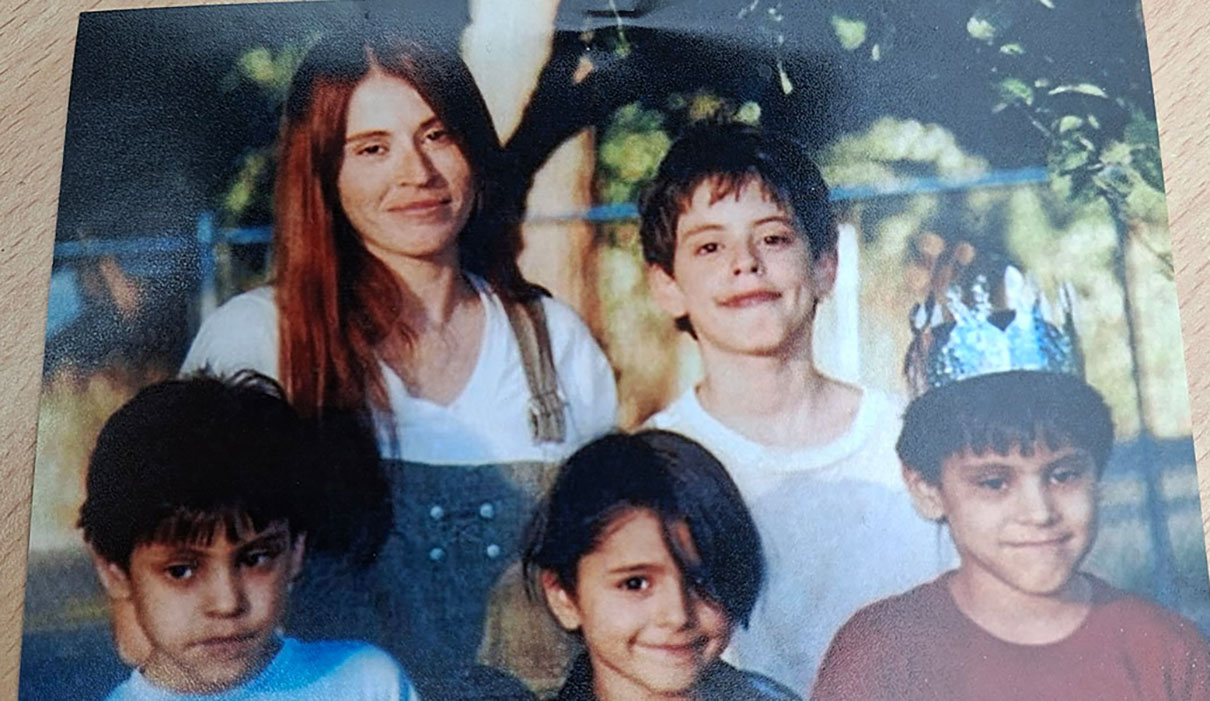
The Wendy Maldonado case is shocking with its sustained and prolonged terror. As a project group, we selected this case as it not only highlights the nature of intimate partner violence and its familial effect, but reveals how worryingly normalised this life experience is for countless families. We wanted to visually lead our exhibition attendees through the story and engage in a meaningful way. For example, home comforts appeared in juxtaposition with the raw facts of the abuse, under our trigger warnings. Our exhibition ‘House of Horror’ was a ‘home’, despite that being a dramatically unsafe home.
Certain experiences stay with you long after the physical space has been cleared and the lights have been dimmed. For our team, the ‘Behind Closed Doors’” exhibition was one of those rare, defining moments. It was a deep human endeavour that we were privileged to be a part of. What drove us was the genuine desire to do something worthwhile.
That freedom, to dig deeper without the weight of assessment, gave the work a different quality altogether. We could ask harder questions, sit longer with difficult ideas, and pursue what felt right rather than what was required.
First and foremost, we want to express our collective gratitude to our Programme Leader, Dr Mia Scally, the host and visionary behind the entire exhibition, who gave a platform and purpose. We were merely the hands helping to realise a vision that she had nurtured with incredible care and expertise.
Seven voices, one mission
Our team (Addison Nichols, Ainhoa Chávez Onofre, Angjelina Begaj, Christo S Cherian, Daisy Delaney, Eleftheria Oikonomaki, and Sol Saoirse Gavin) approached this exhibition with shared responsibility.
We spent hours discussing how to best honour the sensitive subject matter. Every display, piece of research, and physical arrangement was a team effort. We challenged, supported, and most importantly, listened to each other. This exhibition was the synergy of seven people who cared deeply about the message Dr Scally was putting forward.
Navigating difficult content: The weight of the work
The subject matter of ‘Behind Closed Doors’ is, by its very nature, graphic and at times deeply triggering. We navigated this as a team, checking in on one another and recognising when someone needed space or support.
We recognised from the outset that visitors would also be stepping into difficult emotional territory. In response, we implemented safeguarding measures: trigger warnings were displayed prominently at the entrance; national support lines were provided throughout the space; we contacted the university’s Care and Concern and Wellbeing teams in advance to make them aware of the exhibition; and our team remained on site at all times to offer a human presence for anyone who needed it. We also set up an anonymous reflection post box, giving visitors a quiet way to process and share their thoughts. But we wanted to go further.
Wendy: A shared solution for the visitor
The question we kept returning to was: how do we offer visitors a space to reflect and ask the questions that naturally arise after experiencing something so harrowing? We knew that ‘Behind Closed Doors’ would be an intense emotional journey, and we wanted to ensure that no one felt they had to leave with their thoughts left hanging in the air.
This is where the idea for Wendy took shape. The AI interface was not a “tech showcase”; it was a team-conceived solution to a human problem. We envisioned Wendy as a final stop, a conversational bridge where visitors could sit down, reflect, and ask the questions that naturally arise after such a powerful exhibition.
The impact that lasts
One of the most affirming aspects of the exhibition has been witnessing how its impact does not simply fade once the doors close. Conversations sparked by ‘Behind Closed Doors’ have continued: in corridors, in messages, in quiet one-to-one exchanges. Visitors left not just with information, but with a shift in perspective.
A call to fellow students
As students ourselves, we feel strongly that opportunities like this one should be available to more people. The chance to conceive, plan, and deliver something that carries genuine social weight, outside of any formal marking framework, is an extraordinary learning experience. It builds a different kind of confidence, the kind that comes from knowing you contributed to something because you believed in it, not because it was required.
Student voices, when trusted and supported, have the capacity to move people.
Looking ahead: The exhibition returns
We are genuinely excited by the possibility of what comes next. There is talk of Middlesex University hosting a similar set-up again, potentially on a larger scale, with a bigger audience. The prospect of ‘Behind Closed Doors’ reaching more people, across a wider platform, is something we welcome wholeheartedly.
We are open, willing, and ready to contribute again.
Moving forward together
The ‘Behind Closed Doors’ exhibition taught us that the most powerful outcomes happen when a team works in total harmony. We are so proud of what we achieved together, and we are even more grateful for the mentorship of Dr Mia Scally, whose hosting of the event gave us a reason to come together in the first place.
To have worked as a team of seven was a lesson in humility and collective strength. We did not just build an exhibition; we built a community of support, guided by the belief that advocacy is always more powerful when it is done together.