

Ex-Google employee plays down fears about AI in Middlesex talk
6 November 2026
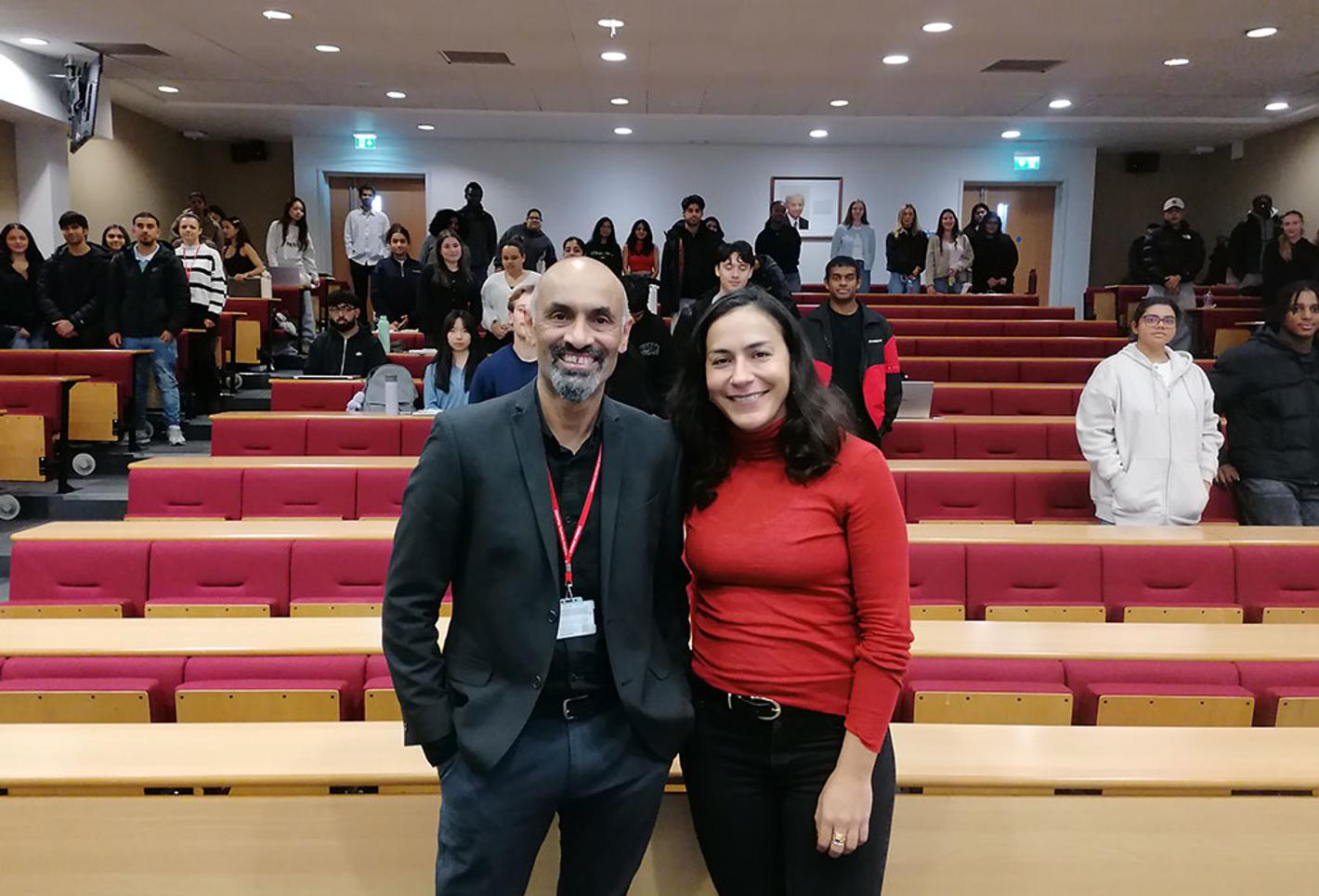
A former Google DeepMind employee from Brent Cross played down fears about artificial intelligence (AI) in a talk for students at Middlesex University
Stephanie Antonian, who runs independent AI company Aestora, dismissed claims that AI will replace jobs in the long run or destroy humanity in an industry speaker event at the University’s Hendon campus.
Hosted by the Middlesex University Business School as part of Careers and Futures Week, Stephanie spoke about her remarkable career journey which began at Brent Cross Shopping Centre greeting customers at Accessorize.
Since then, she has studied at Harvard, researched for Nasa and worked for companies including Accenture, DevelopmentX (Google’sresearch and development arm) and Google DeepMind which researches AI.
Stephanie told students: “I do appreciate when you share a CV like this it looks amazing, like everything I touch turns to gold. But you didn’t see the tears. I got rejected from Accenture, Google and Harvard and it took a year to convince DeepMind to make a role for me. In big tech the ones who are successful are often just normal people who are applying and getting rejected constantly but insisting that it will all be fine and it does often end up working out really well.
“I started my career at Brent Cross, as I grew up living near Brent Cross and went to St Joseph’s Primary School (in Hendon). My dad came here to Middlesex University to study law. So, it’s really nice to come back here to Middlesex today.
“I was one of those street fundraisers throughout university who stop people in the street and ask for direct debits and that’s where I learned my skills, how to talk to people, handle rejection, and put stories together.”
“This was inspiring for students to hear about Stephanie’s incredible career journey and the ups and downs which may not seem obvious.
“It was also reassuring to hear Stephanie play down the potential impact of AI on the future job market. We hope the students take on board her insights and messages.”Sukhbinder Barn, Senior Lecturer in Marketing
During the talk, Stephanie dismissed increasing concerns about AI, pointing to the failures of companies such as Amazon Fresh, Build AI, and Klarna (which reportedly lost £40 billion after replacing staff with AI). She also said AI chatbots fail with basic rules of logic and reasoning, and the physical human is infinitely more complex.
She said: “It’s such a naïve suggestion that a giant autocomplete that is capturing data, only in terms of the intellectual context, is going to unlock the mysteries of the entire planetary system. Something that fascinates me is how little we understand about being alive and being human.
“We look at ChatGPT and think it’s so smart because it uses a million neurons to think in real time and that is impressive, but our brain uses 86 billion neurons. And it does so using far less energy.
“We could take so much of the fears about AI with a pinch of salt if we understood how incredible it is to be human and to be alive, and that has been my main realisation from working in big tech. It certainly hasn’t made me think we’re all going to lose our jobs, not in the long term. AI is literally just a tool for your creativity.”
Stephanie advised students to “hustle” when looking for jobs, inviting people for coffees from companies where they want to work.
She said: “Even with these names on my CV, I will add people on LinkedIn and ask if they will meet for advice and it is amazing how many people will do that. It’s how I got the research placement at Nasa.”
Find out more about Marketing, Media and Communications courses at Middlesex University.
- 2 November 2026