

About Graduate School
The Graduate School comprises hundreds of postgraduate researchers and supervisors engaged in innovative projects that make an innovative contribution to knowledge and practice and to address a range societal challenges.
The Graduate School brings together hundreds of postgraduate researchers and supervisors. They work on innovative projects that contribute to knowledge and practice while addressing a range of societal challenges.
Middlesex University is recognised nationally and internationally for the diversity of its postgraduate researchers. They come from a wide range of ethnicities, countries of origin, professional backgrounds, and walks of life.
Our postgraduate research degrees reflect current academic and professional developments. They can support your career within or outside academia.
We offer a wide range of degrees, including:
- PhDs
- Practice-Based Doctorates
- Doctorates by Public Works
- Masters by Research.
Supervisors who are leaders in their fields guide our postgraduate researchers. Our areas of expertise include:
- sciences
- arts
- education
- health
- social sciences
- business
- professional advancement.
As a prospective postgraduate researcher, you will receive support and guidance from internationally renowned experts. They will also challenge you to achieve your research ambitions.
Our postgraduate research community is vibrant, international, close-knit, and cross-disciplinary. Academic and social events bring together researchers from different fields. These events create opportunities for open discussion and collaboration.
We believe that collaboration grows when people come together. Our academic and social events connect researchers across disciplines and sectors.
The Postgraduate Research Summer Conference is a highlight of our annual calendar. Our whole community comes together on campus for talks, presentations, and discussions. The event allows you to present your work, exchange ideas, and build lasting connections.
Postgraduate researchers can join our research centres and groups. They also receive guidance on joining external bodies and academic and professional networks.
The Graduate School supports postgraduate researchers at institutions that have joint or validated partnerships for postgraduate research degrees. All researchers receive the guidance, resources, and opportunities they need, whether they study on campus or elsewhere.
Our postgraduate researcher development programme covers introductory and advanced topics. The "Kickstarter Series" provides an introduction to research for new researchers.
Sessions are available online or through hybrid delivery. Researchers can attend live sessions or access content on demand.
The Graduate School also provides development programmes for:
- supervisors
- viva chairs
- internal examiners.
Each year, the Graduate School invites research fellows to contribute to the researcher development programme and the University’s research environment.
Meet our postgraduate researchers and alumni

My research, "Leadership: The Art of Being Human", explores how aspects of the self can disappear as people advance through hierarchical structures.
I served in the Royal Air Force for 23 years before completing my Professional Doctorate at Middlesex University.
My role as the RAF’s Leadership Coach emerged directly from my thesis. In this role, I challenge traditional views of leadership as an elite activity. I promote self-leadership as the foundation of effective leadership, making it accessible to everyone, regardless of rank.
My doctoral journey became a living laboratory for my research. I recognised my need for structure, so I sought writing groups and peer connections. In doing so, I practised the self-leadership that I was researching.
This process transformed my understanding of leadership. It moved beyond what I had done during my career to include how I worked and led myself and others.
A significant challenge was claiming ownership of my work. This reflected the "disappearing" of the self that my research addresses.
In the military, achievements are presented as team efforts, and individual contributions are often understated. Recognising my public works as my own required self-leadership while still respecting the contribution of others.
The environment at Middlesex supported my research into inclusive leadership models. Writing groups, virtual cafés, and mentorship showed me how self-leadership can flourish within communities that value diverse contributions.
Today, I work to make leadership accessible to everyone. I help people develop their capacity for self-leadership, regardless of their formal position.
This work directly challenges the generational lag that can delay cultural change in hierarchical organisations. My vision is for organisations to understand leadership as a process to which everyone contributes. This vision began with my research at Middlesex and continues to guide my professional practice.
Connect with me on LinkedIn.

I recently completed a PhD in Criminology at Middlesex. My research explored how young people involved in the Criminal Justice System understand the concept of "family". It also examined the practical implications of their perspectives for policy and practice.
I am now a Lecturer in Criminology at the University of Hertfordshire. I specialise in youth crime and justice, media and crime, and green criminology.
My research interests connect criminological theory, policy, and practice. I am committed to promoting critical engagement among students and developing innovative approaches to criminology education.
Choosing Middlesex was a natural decision because I had developed a strong connection with the University during my Master’s studies.
The supportive academic environment influenced my decision. A tutor also recognised and encouraged my interest in youth crime and justice.
The University’s commitment to socially relevant research matched my academic and professional aims. Its emphasis on interdisciplinary approaches to criminology was also important to me.
The support I received during my postgraduate research was exceptional. Specialist training in data collection and analysis helped me develop my research skills. Public-speaking competitions also strengthened my confidence.
My supervisors provided invaluable guidance. They were always willing to meet, review my drafts, and offer constructive feedback.
One of the main lessons I learned was the importance of reflexivity. Researchers must understand how their own perspectives and experiences shape their approach.
My PhD also taught me resilience and perseverance. Independent research, critical feedback, and long-term project management strengthened my ability to work independently. They also showed me the value of working with peers and mentors.
I became more confident in expressing my ideas through writing, presentations, and academic discussions. These are essential skills for any researcher.
My long-term aim is to develop my career as an academic researcher and educator. I want to contribute to criminological scholarship and innovative teaching.
I am particularly interested in practice-based and authentic learning in criminology education. Students need opportunities to develop the critical and practical skills required for careers in criminal justice.
Connect with me on LinkedIn.
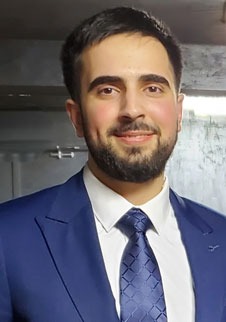
I completed an MSc by Research at Middlesex University after gaining my BSc in Computer Science at Middlesex.
My research focused on developing innovative solutions for Ambient Assisted Living (AAL) systems. It explored how different technologies could be integrated within AAL settings. This work aimed to improve quality of life for older people and people with cognitive disabilities.
I now work as a software engineer at Travelfusion. I use my software development expertise to create advanced solutions for the travel industry. My role involves solving complex technical problems and contributing to projects that affect users worldwide.
I chose Middlesex University because of its strong reputation in Intelligent Environments and Ambient Assisted Living research. The University’s focus on practical applications matched my research interests.
Middlesex gave me access to cutting-edge technology, expert supervision, and a collaborative research environment. The most rewarding part of my postgraduate research was working with the Research Group on Development of Intelligent Environments and in the Smart Spaces Lab.
My time at the University taught me the value of adaptability and effective time management. Working through complex problems developed my critical thinking and ability to create innovative solutions.
Working in a multidisciplinary laboratory team improved my communication skills and broadened my perspective. I also became more resilient and confident when addressing challenges.
My long-term aim is to become a leading researcher and developer. I want to help make smart home technologies more accessible and beneficial for people who need them.
I also hope to mentor new researchers and collaborate internationally to advance the field.
Connect with me on LinkedIn.

I am a PhD candidate in Computer Science. My research focuses on implementing Digital Forensics Readiness in Big Data Wireless Medical Networks.
The consistent support from Faculty staff and supervisors has been one of the most rewarding aspects of my research at Middlesex.
Middlesex University stood out because of its support for international students. I began my PhD in 2020, during the height of the COVID-19 pandemic. This created major challenges for research access and finances.
Middlesex provided comprehensive blended learning platforms, allowing my research to continue. My supervisors helped me manage complex challenges alongside my other responsibilities.
My experience at Middlesex strengthened my problem-solving skills, perseverance, and adaptability. These qualities are essential for research.
Managing a PhD, several teaching roles, and family responsibilities has been challenging. It has also strengthened my resilience, endurance, and confidence in pursuing ambitious goals.
After completing my PhD, I plan to advance my career in cybersecurity and digital forensics research. In the short term, I will move into a permanent full-time Lecturer role in Cybersecurity at the University of Winchester.
Middlesex University has played an important role in my academic and professional development. I intend to use my experience to contribute to cybersecurity research and education in the UK and Uganda.
Connect with me on LinkedIn.
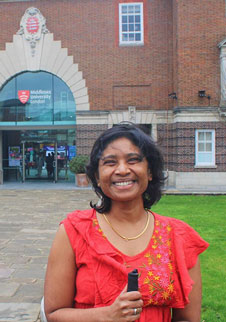
I began my PhD in Creative Writing at Middlesex University in 2022. Before this, I worked as an HR professional and novelist.
I have found Middlesex to be an inclusive and welcoming environment. This environment helped me complete my creative work to the best of my ability. I received support from academic and professional staff throughout the process.
The University provided supervisors who were well suited to my research. Its disability and neurodiversity support services have been excellent. I was paired with an effective support worker, and academic staff were always available and open to discussion.
In my first year, I experienced technical difficulties because some online platforms were incompatible with my screen-reading software. I worked with Library Support and the IT team to resolve these issues.
Using a screen reader can also be tiring. I benefited from the RNIB’s library of research books for visually impaired people, which I accessed through Middlesex.
I recommend dividing research into achievable goals, setting personal milestones, and remaining focused on them.
I worked every day and set clear time limits. For example, I would work until 5.00pm and then focus on my personal life. Regular breaks are also important. When you become deeply focused on your research, stepping away for a short time can help you return with greater concentration.
In April 2025, I ran the London Marathon to raise money for the Royal National Institute of Blind People (RNIB).
I plan to publish my book, The Billionaire Dollar Dream, independently. I also hope to become a full-time writer.

I am a doctoral researcher at Middlesex University. My work explores the relationship between systems thinking, psychological safety, and leadership in hybrid teams.
My research examines how leadership behaviours affect team well-being and staff retention. It focuses particularly on fast-paced, hybrid working environments.
I am also the founder of Go Slow to Go Fast, a leadership development studio. It helps teams build resilience and achieve sustainable high performance. Our work supports leaders and organisations as they manage complexity.
I chose Middlesex University because of its practitioner-focused approach to research. Its emphasis on the practical use of knowledge in management studies was also important to me.
The most rewarding part of my postgraduate research has been gaining the confidence to connect theory with practice. My research has deepened my academic understanding and strengthened the authenticity of my professional work.
It has also provided valuable insights for our work at Go Slow to Go Fast.
My supervisors have helped me refine my thinking, challenge assumptions, and develop a research framework with practical applications.
Middlesex has provided structured and constructive feedback. At first, I found it difficult to move from a narrative-led practitioner perspective to an academic research approach.
My supervisors encouraged me to engage critically with existing research instead of relying only on professional insight.
I plan to refine my research framework, contribute to academic and industry discussions, and publish findings that connect research with leadership practice.
Connect with me on LinkedIn.