
Students transform waste into imaginative social spaces
30 October 2026
Interior Architecture students showcase creativity and sustainability through ambitious design-and-build project
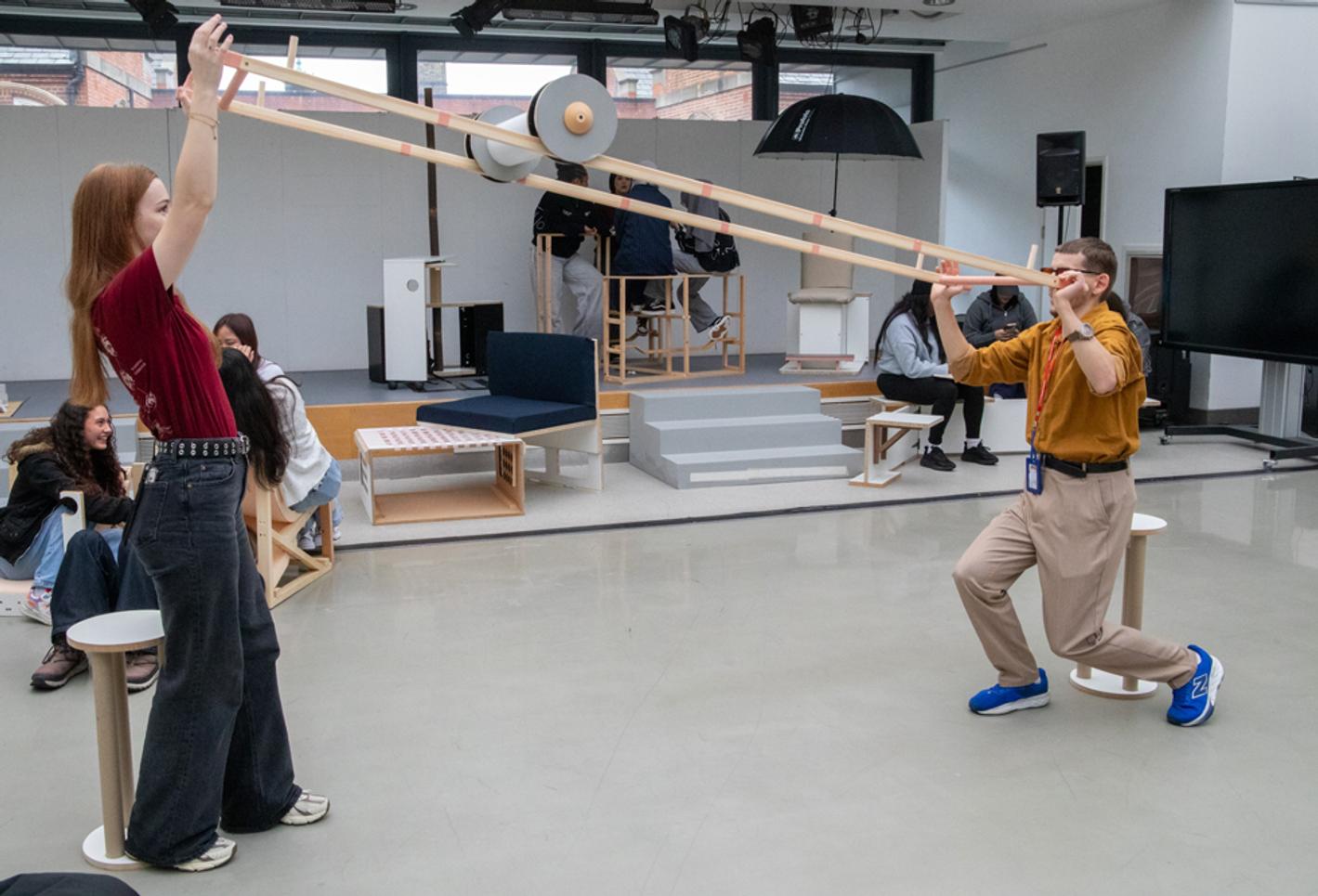
Second-year Interior Architecture students at Middlesex University have transformed discarded materials into imaginative places to eat, sit and meet as part of Making Futures, a project exploring sustainable design through hands-on making.
Working in groups, students designed, built and tested their ideas before exhibiting their finished 3D designs at the University.
The brief challenged students to create a hybrid place to eat, sit or meet using unwanted materials. Working at full scale, they explored how design ideas develop from concept to construction, learning about materials, making techniques and how people interact with the spaces around them.
A key element of the project was the study of proxemics - how people use and experience space in relation to one another. Students were encouraged to think about how design can influence social interaction, movement and behaviour, creating environments that bring people together in different ways.
Sustainability was central to the brief, with students working primarily from 100 per cent recycled waste materials. The project encouraged them to see discarded materials as valuable resources that could be adapted and reused in inventive ways, supporting the principles of a circular economy.
Each group approached the challenge differently, producing a diverse range of designs.
Among them was ‘InBetween’, created by Indrit Sutaj, Zoriana Sydiaha and Alexandra Chelcioiu. The design featured a track-mounted roller that two or more people could interact with, either at floor level or raised above users.
Another project, ‘Invitation’, designed by Hoodi Asadi, Lu Studtmann and Vaidika Nandola, combined a foldable chair and table with integrated storage to create a flexible and adaptable meeting space.
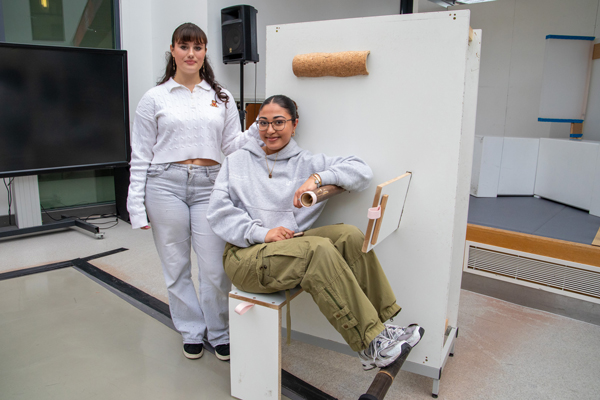
Meanwhile, Kashish Sharma, Alice Jones and Julia Stanowska developed a seating and storage unit whose playful form is reminiscent of the oversized obstacles seen on the television gameshow Total Wipeout.
Students described the experience of developing and constructing their projects as “challenging and fun at the same time”, reflecting the balance of creativity, collaboration and practical problem-solving sitting at the heart of the brief.
“The project encouraged students to think creatively about both sustainability and human interaction. By building their ideas at full scale, they experienced first-hand how materials, construction methods and design decisions shape the way people use and enjoy a space. I was particularly impressed by the confidence students showed in transforming discarded materials into imaginative and engaging designs. The project demonstrates that sustainable design is not about compromise, but about finding new possibilities in materials that might otherwise be overlooked.”
The project is one of several opportunities for Middlesex students to apply their design skills to real-world challenges.
Earlier this year, Interior Design and Architecture students developed proposals to reimagine the foyer of the historic Phoenix Cinema in East Finchley. Their designs were warmly received, demonstrating how creative thinking can contribute to community-focused projects.
The final exhibition in the Grove Atrium at the University’s Hendon campus showcased the ingenuity and ambition of the students' work, highlighting the potential of adaptive reuse and sustainable design to create meaningful spaces from materials that might otherwise have gone to waste.
Find out more about Middlesex University Art and Design degrees.